Why Does My Mom Show as My Aunt on AncestryDNA
A 1,551 cM match is not a chip error. It is the aunt/half-sibling range, not the 3,400 cM a biological mother shares.
If AncestryDNA is showing the woman you tested as an aunt and you expected mother, stop and read the shared centimorgan number. A biological mother shares roughly 3,400 to 3,500 centimorgans with a child. A match near 1,551 cM is not a routine chip error. It is the amount of shared DNA seen with an aunt, uncle, niece, nephew, grandparent or half-sibling.
Why is my mom showing as my aunt instead of my mother on AncestryDNA?
AncestryDNA does not know who raised you. It labels a match by the total shared cM and the number of shared DNA segments. If the total is near 1,551 cM, the algorithm's best guess will land in the aunt zone. The word aunt is not a family verdict. It is a label for a range that includes several relationships that share about 25 percent of autosomal DNA.
A true mother and child share about 3,400 to 3,500 cM. A 1,551 cM match is not a misread mother. It is the aunt/half-sibling zone.
What 1,551 cM means in actual shared DNA
Centimorgans measure how much DNA is identical because it came from a recent common ancestor. A biological mother gives you one copy of each autosomal chromosome, so the shared cM total is about 3,400 to 3,500. An aunt shares with a niece through the shared grandparent, roughly one quarter of autosomal DNA, which usually lands near 1,700 cM. The ranges overlap with half-siblings because half-siblings share one parent, not two.
| Relationship | Shared cM | Shared DNA |
|---|---|---|
| Biological mother/child | 3,400-3,500 | 50% |
| Aunt/uncle/niece/nephew | 1,300-2,300 | ~25% |
| Half-sibling | 1,300-2,300 | ~25% |
| Grandparent/grandchild | 1,200-2,300 | ~25% |
| First cousin | 575-1,330 | ~12.5% |
Scroll the table sideways for the rest →
Approximate ranges for close relationships on AncestryDNA.
An aunt, uncle, niece, nephew, grandparent and half-sibling all cluster near 25 percent. That is why Ancestry cannot always tell them apart from cM alone. Your ages and a linked family tree can push the label one way, but the number is the part you can rely on.
When it can still be your biological mother
At 1,551 cM, almost never. A routine chip error cannot turn a 50 percent match into a 25 percent match because parent-child sharing is a huge signal. A sample mix-up could do it, so check whether you uploaded the right file or whether the kit was contaminated. A much rarer possibility is maternal chimerism, where a woman has two genetically different cell lines and her saliva cell line does not match the egg line that made you. That exists in case reports, but it is rare. If the cM number is accurate, the tested woman is a close biological relative, not your birth mother.
What to check in AncestryDNA right now
- Record the shared DNA in centimorgans and the number of segments. If the cM total is 3,400 or higher, the aunt label is wrong and AncestryDNA support should be contacted.
- Open shared matches and compare them to known relatives. A maternal aunt will share many relatives from your mother's side but not your father's. A half-sibling may share relatives from one parent only.
- Check the possible relationship list, not just the single label.
- Test another known close relative if you can, especially a full sibling, half-sibling, father or maternal grandmother.
Triangulation with one more known relative can separate a maternal aunt from a half-sibling faster than any single label.
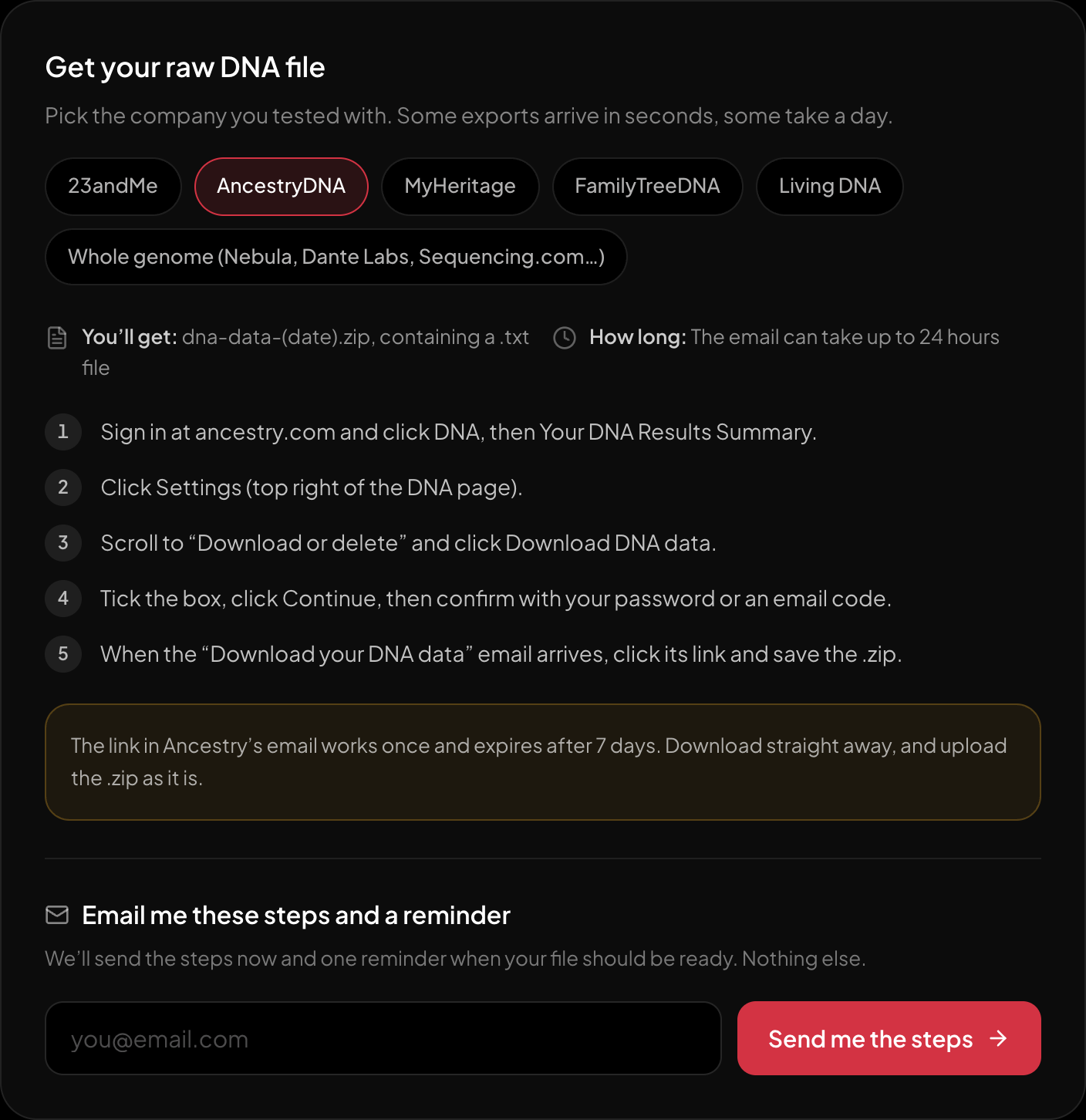
The download steps for AncestryDNA, on the page itself.
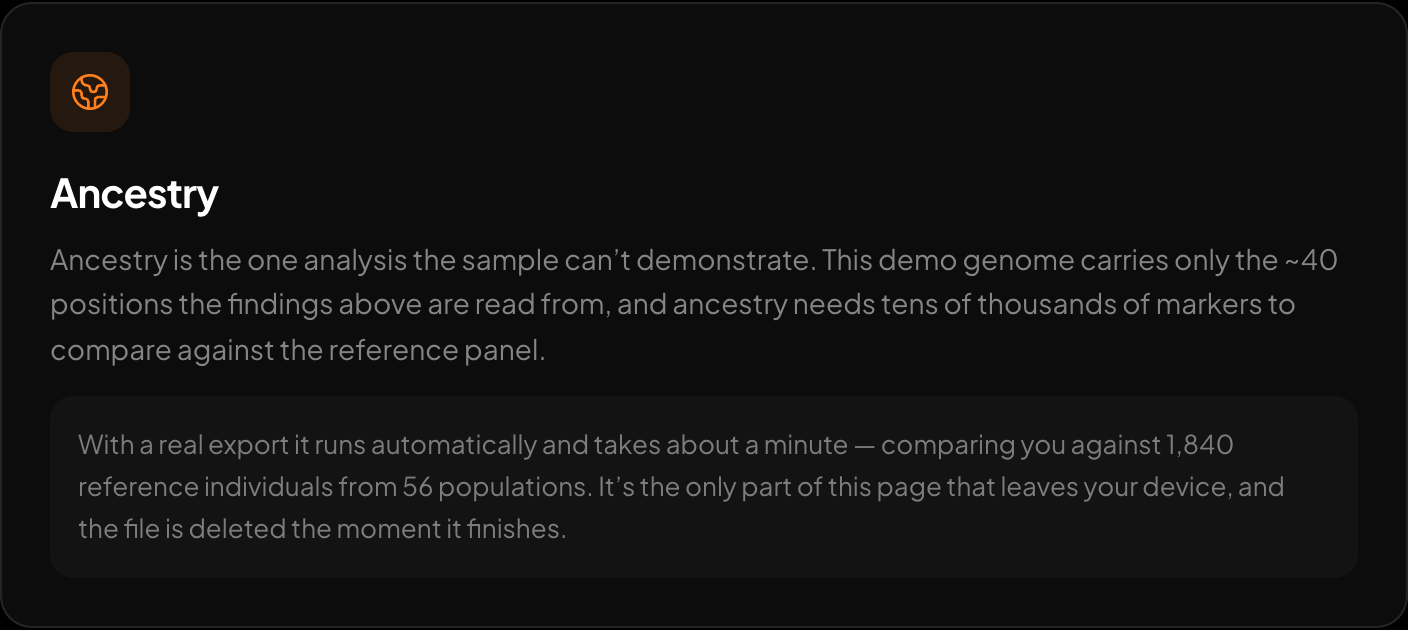
Ancestry across 15 regions and 157 reference populations.
You do not need another page to understand this result. The shared cM number is the answer, and the next step is up to you. If you still have your raw DNA file, the free browser tool reads 23andMe, AncestryDNA, MyHeritage or whole-genome VCF data and reports traits, medication response, carrier findings and optional ancestry. It does not match you to relatives, which keeps family questions separate from your own health data.
New to raw DNA files? Start with the full guide: How to Download & Analyze Your 23andMe Raw Data Free
Written by
HealthOS Research