What 0/1, 1/1, and ./. Mean in a Whole-Genome VCF File
0/1 means heterozygous in a VCF: one reference allele and one alternate allele. The GT field is a genotype call encoded as allele indexes, not a health verdict.
In a whole-genome VCF file, 0/1 means the position is heterozygous at a diploid autosomal site: one chromosome carries the reference allele from the REF column and the other carries the alternate allele from ALT. 1/1 means homozygous alternate, 0/0 means homozygous reference, and ./. means no call. The GT field is a genotype call encoded as allele indexes, not a health verdict. The numbers index REF and ALT alleles in order; they do not count mutations or imply effect direction. This article focuses on diploid autosomal sites. Sex chromosomes, mtDNA, or haploid records may use single-number GT values such as 0, 1, or ./..
What does 0/1 mean in my VCF file?
The GT field in the sample column stores the genotype. The numbers refer to alleles in the order they appear after REF. 0 is the reference sequence at that position. 1 is the first alternate allele in the ALT column. If there are multiple ALT alleles, 2 is the second, and 1/2 means two different alternate alleles. A multiallelic example is 0/2, which means one reference and the second alternate. For AD, read support is listed for REF first and then each ALT allele in order, so AD 10,0,7 means 10 REF reads, 0 first ALT reads, and 7 second ALT reads.
A simplified valid VCF line looks like this:
1 169549811 . C T . . . GT:AD:DP:GQ 0/1:12,8:20:99
| Column | Value in the example | What it means |
|---|---|---|
| CHROM | 1 | Chromosome |
| POS | 169549811 | Position on the chromosome |
| ID | . | No rsID assigned in this raw VCF line |
| REF | C | Reference allele |
| ALT | T | Alternate allele |
| QUAL | . | No quality score in this simplified line |
| FILTER | . | No filter status in this simplified line |
| INFO | . | No INFO annotation in this simplified line |
| FORMAT | GT:AD:DP:GQ | Fields in the sample column |
| SAMPLE | 0/1:12,8:20:99 | Genotype, allelic depth, total depth, genotype quality |
Scroll the table sideways for the rest →
A quick map to make the example line readable. The example uses diploid autosome assumptions.
Here the reference is C, the alternate is T, and 0/1 says the caller saw both. The allelic depths are 12 reads for C and 8 for T, with total depth 20. GQ is 99, so the call is high confidence.
A pipe instead of a slash, 0|1, means phased. A slash means unphased. Many WGS VCFs are unphased; a pipe indicates a phased call when phasing has been supplied.
The GT value says which alleles were seen. It does not say whether the change is pathogenic, protective, or irrelevant.
0/0, 0/1, 1/1, and ./. side by side
| Genotype | Alleles present | What it tells you |
|---|---|---|
| 0/0 | Two reference alleles | Matches the reference assembly at this position. Not automatically normal. |
| 0/1 | One reference, one alternate | Heterozygous. May be a carrier for a recessive variant, or a trait or risk allele. |
| 0|1 | One reference, one alternate, phased | Heterozygous with the alternate on one homolog and reference on the other when phasing has been supplied. |
| 1/1 | Two alternate alleles | Homozygous alternate. May matter more for recessive conditions, or not matter at all. |
| ./. | No call | Missing data. Do not read it as 0/0. |
Scroll the table sideways for the rest →
How to read common GT values at diploid autosomal sites. Sex chromosomes, mtDNA, or haploid records may use single-number GT values such as `0`, `1`, or `./.`.
The common error is to treat 1/1 as bad and 0/0 as good. Reference means the base matches the reference genome build used for alignment, which is a coordinate system. An alternate allele can be common, rare, harmless, trait-related, or pathogenic. The GT field will not tell you which.
Why 1/1 is not automatically a health finding
Clinical meaning comes from annotation, not from GT. A 1/1 call in HFE may be relevant if the specific variant has iron-loading evidence behind it. A 1/1 call in an uncharacterised region may mean nothing we currently know how to read. A 0/1 call in a recessive condition usually means a carrier state for that variant, which often has no personal health effect but can matter for reproductive planning.
The fields worth reading before trusting a call: - DP total read depth. A call with DP=2 is less certain than DP=30. - GQ genotype quality. GQ 20 means roughly a 1 in 100 chance the call is wrong; GQ 30 means roughly 1 in 1,000. - AD allelic depth. It shows how many reads support each allele, so you can see if a 0/1 is balanced or borderline.
What does ./. actually mean?
./. means no call. It is not a silent 0/0. People sometimes fill missing genotypes with reference by mistake, which can hide a real alternate call in a low-coverage region.
A no-call can happen because coverage was too thin, reads mapped ambiguously, or the sample quality at that position was poor. If a ./. sits in a gene you care about, the honest answer is that you do not know from this file. Look at the raw depth if available, or treat it as missing data.
Does 0/1 mean I am a carrier?
For an autosomal recessive condition, yes, if the specific variant is classified as pathogenic and the condition follows a recessive pattern. One alternate copy is the carrier state. For a dominant condition, 0/1 may or may not be clinically important depending on penetrance. For a benign trait allele, 0/1 is just a genotype. Carrier status and health findings depend on variant classification, inheritance model, and quality metrics. GT alone is not a diagnosis, and a clear panel is not a diagnostic all-clear. Carrier status is an interpretation layered on top of GT, not something GT states.
Whole-genome VCFs sometimes leave the ID column as . when no rsID has been assigned. Then you need the chromosome, position, and REF/ALT bases to know which variant you are looking at. That is why a genotype call alone can feel unreadable: the file gives coordinates and alleles, not a conclusion.
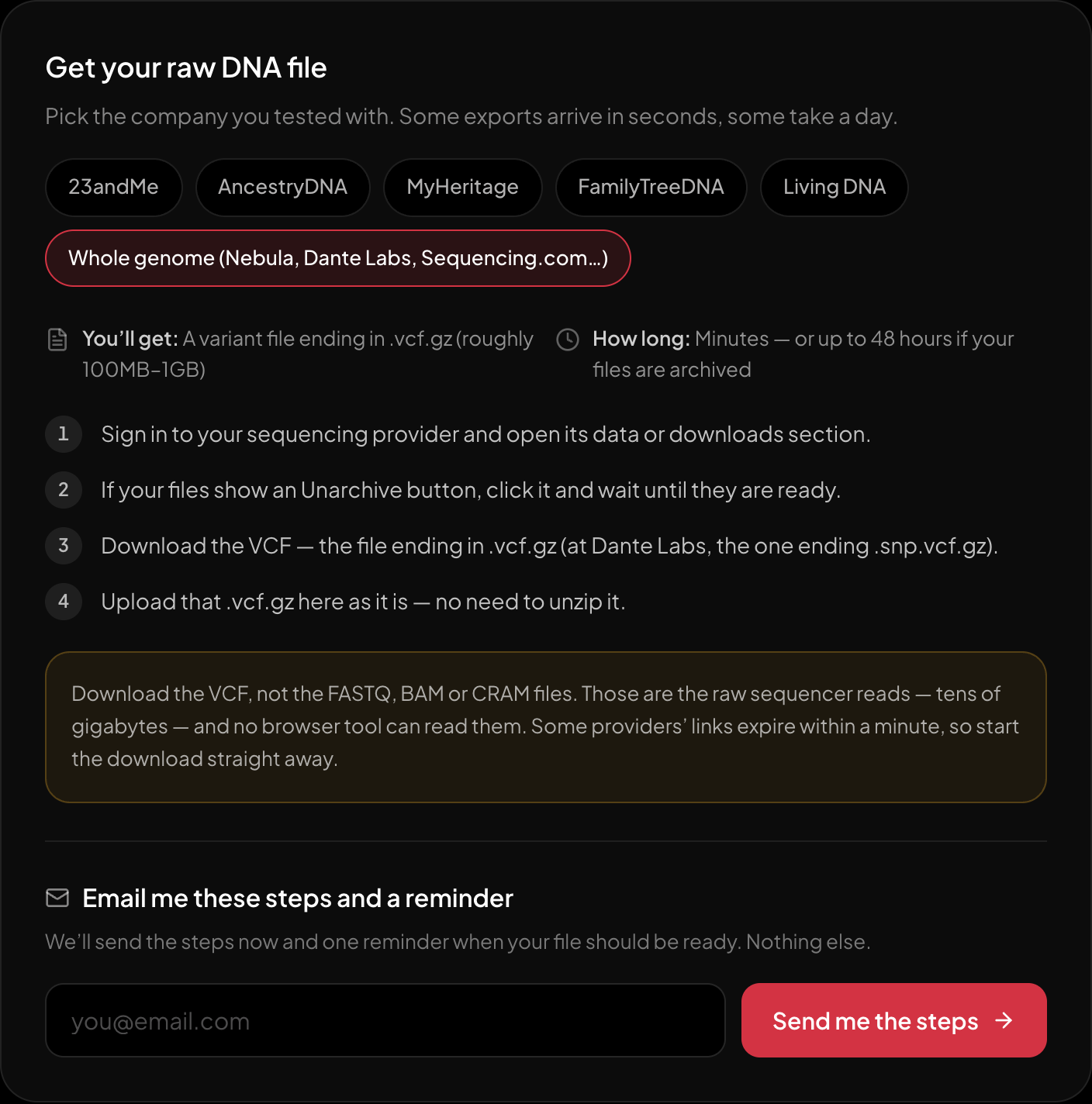
The download steps for whole-genome sequencing, on the page itself.
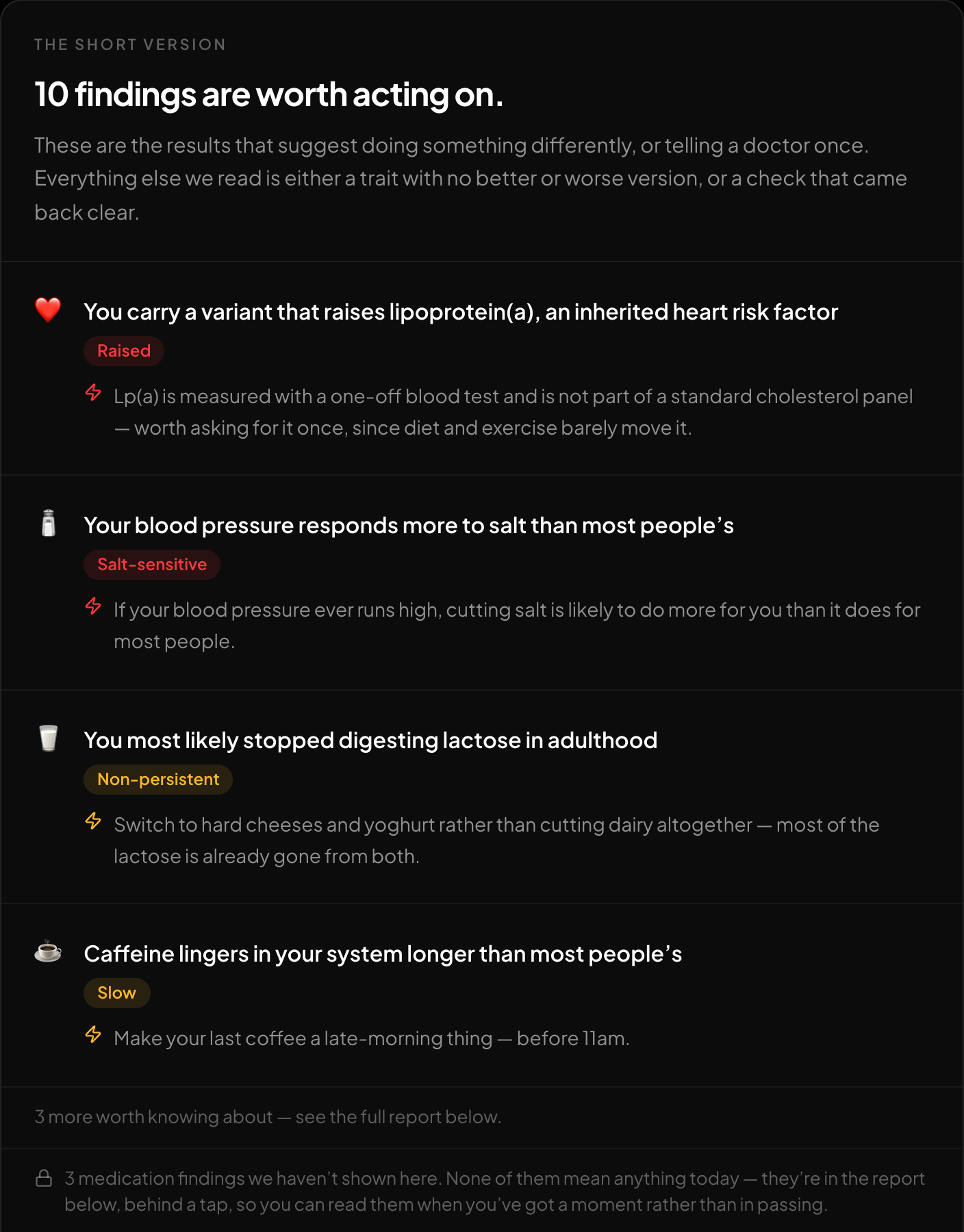
The short version: what is worth acting on, first.
If you have a raw 23andMe, AncestryDNA, MyHeritage, or whole-genome VCF file and want to see how HealthOS reads your file, the free DNA tool at https://healthosx.com/dna parses it in the browser. Sequencing files without rsID annotations still work for ancestry on GRCh37 coordinates, but cannot produce the health findings that need named positions. HealthOS ancestry runs on the server only with explicit consent. The initial trait and health story needs no account. The full free report opens after a one-time email code.
New to raw DNA files? Start with the full guide: How to Download & Analyze Your 23andMe Raw Data Free
Written by
HealthOS Research