What TPMT and NUDT15 Mean in Your 23andMe Raw Data
TPMT and NUDT15 are gene names that appear as rsID lines in raw data, not a diagnosis. A low-activity variant may increase toxicity risk with standard thiopurine doses.
In a 23andMe raw file, TPMT is a gene name that appears as rsID genotype lines, not a diagnosis. It matters mainly for thiopurine drugs such as azathioprine, 6-mercaptopurine, and thioguanine. A low-activity TPMT or NUDT15 variant can raise the risk of myelosuppression with standard starting doses. Myelosuppression means low blood cell counts because bone marrow activity is suppressed, which can lead to infection or bleeding.
Do not change a dose on your own. If you see a risk allele, show the exact marker to a prescribing doctor. Ask whether the starting dose should be adjusted or blood counts checked more often. The genotype is one part of a decision that includes your diagnosis, kidney and liver function, and current blood counts.
What TPMT means in a 23andMe raw file
TPMT and NUDT15 encode enzymes involved in processing thiopurine drugs. TPMT methylates and inactivates thiopurine metabolites. NUDT15 removes phosphate groups from active thiopurine nucleotides, reducing the active drug pool. A reduced-function variant in either gene may lower that braking capacity. This matters only if you take a thiopurine drug. If you never take those, the finding does not change daily life.
Consumer raw data is not clinical. Consumer arrays test only selected variants, and they may miss rare TPMT or NUDT15 variants that affect enzyme activity. Any medication decision should involve a clinician and, when appropriate, confirmatory pharmacogenomic testing.
What raw file lines look like
A 23andMe .txt line is tab separated and usually ends with your genotype. A VCF line stores the reference and alternate alleles and the genotype in a GT field. Strand, orientation, and chip version can affect which rsIDs are present and how the genotype is reported.
| File type | Example line |
|---|---|
| 23andMe .txt | rs116855232 13 48608575 CT |
| VCF | 13 48608575 rs116855232 C T . . . GT 0/1 |
Coordinates are GRCh37/hg19, used by many 23andMe .txt files. If your VCF uses GRCh38, the position can differ. This example is not a guarantee that your chip includes this rsID; strand, orientation, and chip version can change what is reported.
Not every 23andMe version includes TPMT and NUDT15 markers. The example above is not a guarantee that these rsIDs are in your file. If a marker is absent, the test did not evaluate that position.
What low-activity genotypes look like
For markers that are present, the pattern is simpler than star-allele names suggest. A normal genotype at the tested positions means only that those positions are normal. It is not an all-clear for rare variants or for variants not on the array.
One risk allele may suggest intermediate activity only if there are no other pathogenic variants and the haplotype or phasing is correct. Raw consumer data alone cannot confirm TPMT/NUDT15 phenotype or star alleles. Two risk alleles in the same gene may mean lower activity, but raw data cannot confirm whether they are on opposite chromosomes or fully inactive.
| Marker | No risk allele | One risk allele | Two risk alleles |
|---|---|---|---|
| TPMT markers if present, for example rs1800462, rs1800460, or rs1142345 | Normal activity at those positions | Possible intermediate activity; clinician may consider dose adjustment and blood count monitoring based on CPIC guidance and the specific drug | Possible low activity and high toxicity risk; confirmatory testing may be needed |
| NUDT15 rs116855232 (c.415C>T), if present | C/C normal | C/T possible intermediate activity | T/T possible low activity and high toxicity risk |
Scroll the table sideways for the rest →
This is a guide only. It does not guarantee that a chip includes these markers. One risk allele may suggest intermediate activity only if no other pathogenic variants and the haplotype or phasing is correct. Raw data alone cannot confirm star alleles or phenotype. Dosing decisions should follow CPIC guidance.
Dosing depends on the drug, the disease, and other test results. Follow CPIC guidance for the specific drug.
Population patterns
TPMT and NUDT15 low-activity variants are not evenly distributed across populations. CPIC guidance notes that NUDT15 c.415C>T is more common in East Asian populations and less common in other groups. TPMT low-activity alleles occur across many populations. These are population tendencies, not individual predictions. A normal TPMT result is not an all-clear. Someone with East Asian ancestry can have normal TPMT on an array and still be NUDT15 low activity, and the bone marrow risk remains.
Does a normal TPMT result mean thiopurines are safe?
No. A normal result covers only the variants present on the array. Rare TPMT variants that are not on a consumer chip can still reduce activity. NUDT15 must be checked separately. Blood count monitoring remains standard because drug dose, kidney function, and interactions can cause myelosuppression even with normal genotype. The common mistake is treating a negative direct-to-consumer genotype as an all-clear to skip monitoring.
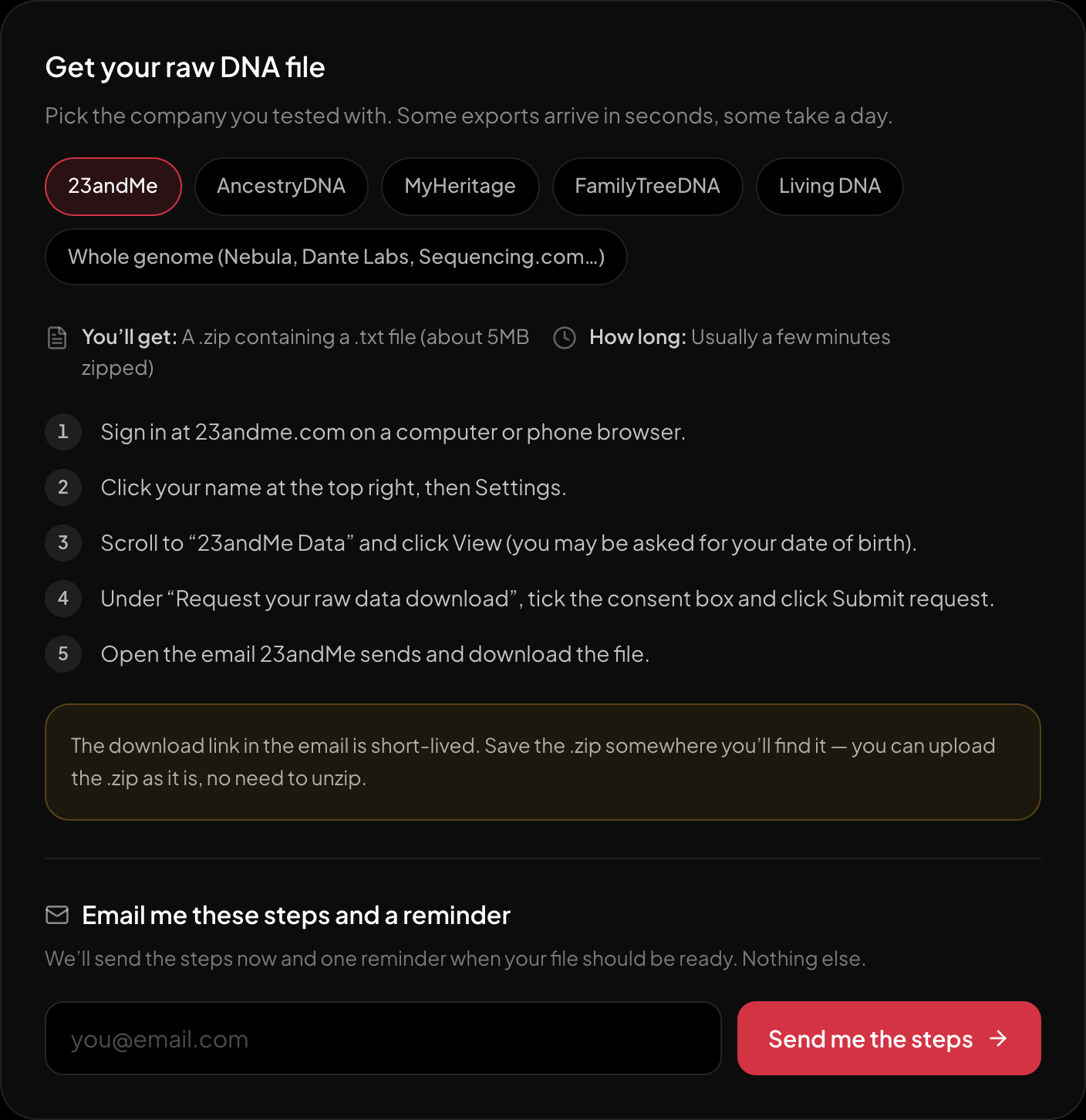
The download steps for 23andMe, on the page itself.
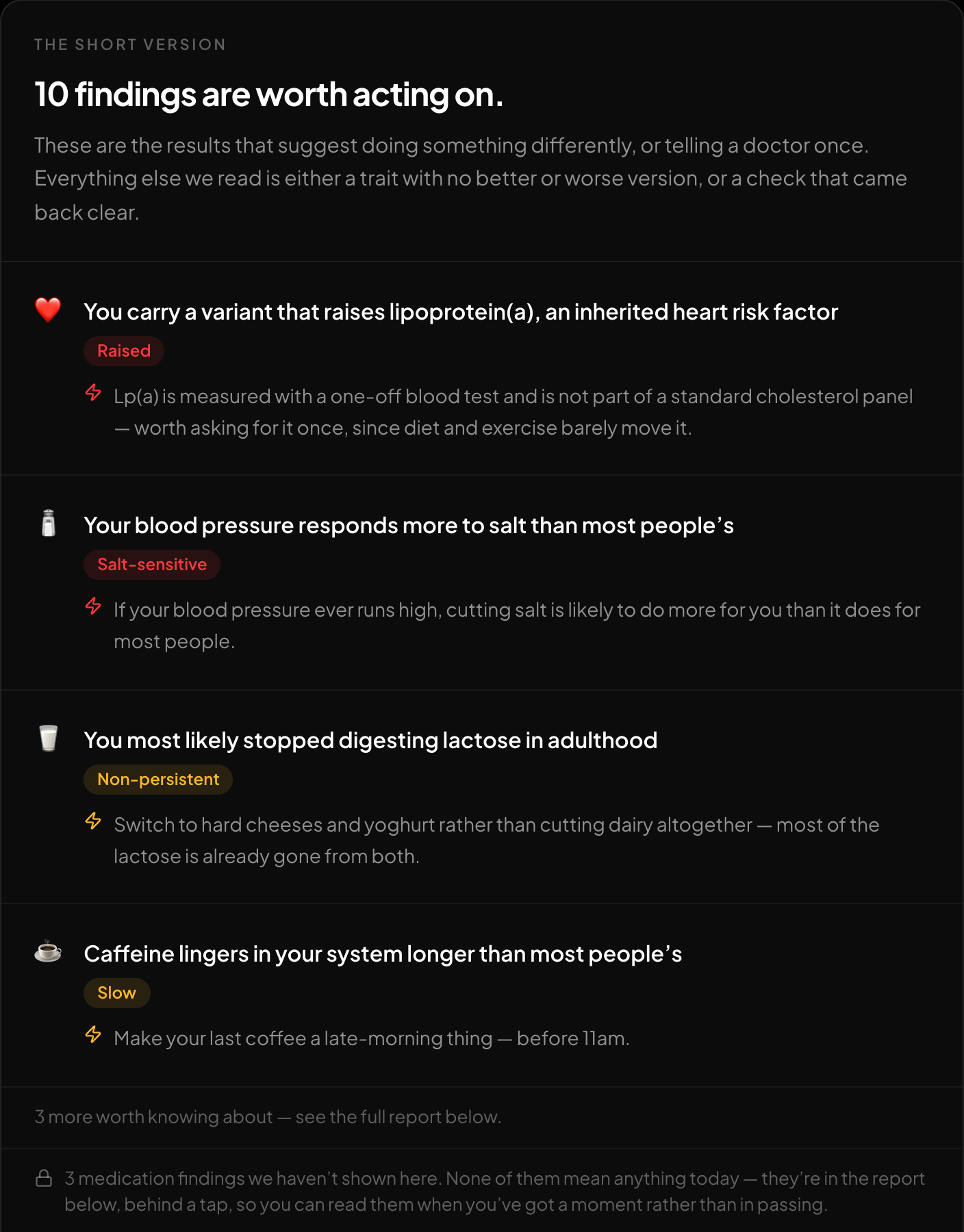
The short version: what is worth acting on, first.
If you want to check these markers in your own 23andMe, AncestryDNA, MyHeritage or whole-genome VCF file, HealthOS DNA parses supported raw files in your browser. HealthOS reports medication response using CPIC gene-drug guidance. The full report opens after a one-time email code. It does not provide a diagnosis or clinical decision.
New to raw DNA files? Start with the full guide: How to Download & Analyze Your 23andMe Raw Data Free
Written by
HealthOS Research