What MUTYH Means in Your 23andMe Raw Data
One MUTYH variant is a carrier finding. Two copies mean possible MUTYH-associated polyposis, and the next step is a colonoscopy conversation.
If your 23andMe raw data flags MUTYH, it usually means the file contains one of two common variants: rs34612342 (Tyr179Cys) or rs36053993 (Gly396Asp). One copy of either is a carrier finding. Two copies, whether the same variant twice or one copy each of the two variants, signal possible MUTYH-associated polyposis, which needs a colonoscopy conversation rather than a shrug.
What does MUTYH mean in my 23andMe raw data? Most consumer chips do not sequence the whole MUTYH gene. They genotype a small number of known positions. 23andMe raw data usually includes two common MUTYH variants when the chip version covers them. The raw data line has an rsID, chromosome 1, a position and a two-letter genotype. Older sources may call the variants Y165C and G382D because the protein numbering changed.
What MUTYH actually does Cells spend all day repairing oxidation damage to DNA. One of the most common injuries is an oxidized form of guanine called 8-oxoguanine. If left alone, it can pair with adenine instead of cytosine during replication. MUTYH is the protein that notices that mispair and removes the adenine from the newly copied strand during or after replication. If both copies of the gene are broken, the repair is weaker. Over years, mutations accumulate in cells that line the colon, sometimes in the APC gene that normally keeps polyp growth in check. The result is polyps.
One copy: carrier, not a red flag MUTYH-associated polyposis is autosomal recessive. You need two broken copies to lose enough MUTYH function. One copy leaves the other working. About 1-2% of people of European descent carry one of the common variants. A carrier does not have MAP, and most guidelines do not put one-copy carriers on the same colonoscopy schedule as two-copy carriers. Some studies suggest a small colorectal cancer increase in carriers, but the evidence is not strong enough to overturn the main point: one copy is a reproductive and family finding, not a polyp diagnosis.
One MUTYH variant is a carrier note. Two MUTYH variants change the question from 'ancestry curiosity?' to 'when should I start colonoscopy?'
Two copies: the finding to take seriously Two copies of the same variant are biallelic MUTYH. One copy each of rs34612342 and rs36053993 means two risk variants, phase unknown. They are possibly compound heterozygous; raw data cannot phase. Family or molecular testing can confirm trans. The condition is MUTYH-associated polyposis, MAP. The polyp count varies. Some people have dozens to hundreds; some have fewer than ten, which is why a normal-looking colon once does not rule it out. Colorectal cancer risk is high enough that surveillance colonoscopy every one to two years from early adulthood is the usual recommendation, with upper GI screening considered later. The finding is not a cancer sentence. It is a schedule change.
| Raw data finding | MUTYH meaning | What to do |
|---|---|---|
| One copy of rs34612342 or rs36053993 | Carrier of one MUTYH variant | No MAP colonoscopy schedule; tell relatives |
| Two copies of the same variant | Two broken MUTYH copies | Ask about polyposis surveillance |
| One copy of each variant | Two risk variants, phase unknown | Ask about polyposis surveillance; family or molecular testing can confirm trans |
Scroll the table sideways for the rest →
The common variants on consumer chips. A missing line does not equal a negative.
When the raw data shows nothing If your file has no line for rs34612342 or rs36053993, that means the chip did not call that position or the file was not annotated. It does not mean you have no MUTYH risk. 23andMe and similar arrays test only the common variants. Rare MUTYH variants, which matter in some families, need gene sequencing. If you have a strong family history of colorectal polyps or early colorectal cancer, a negative consumer-chip MUTYH result is not a full screen.
What to do with a MUTYH result
- One copy: tell siblings, and if pregnancy planning is relevant, partner testing can clarify a 25% chance for each child when both parents are carriers.
- Two copies: ask for colonoscopy with a provider who knows polyposis syndromes, start early adulthood, and share the finding with siblings.
- No common variant: do not treat a raw data absence as a full gene screen.
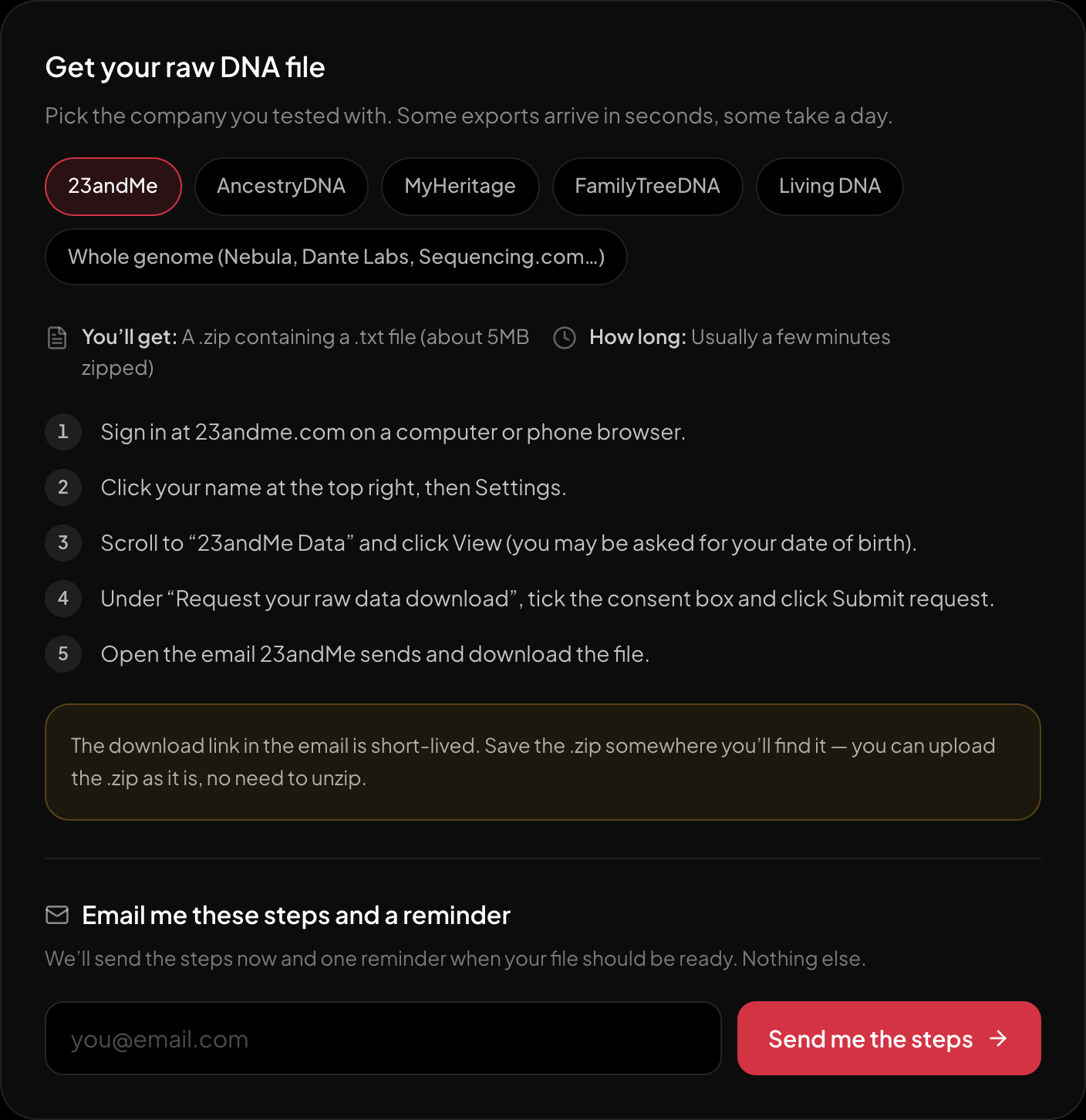
The download steps for 23andMe, on the page itself.
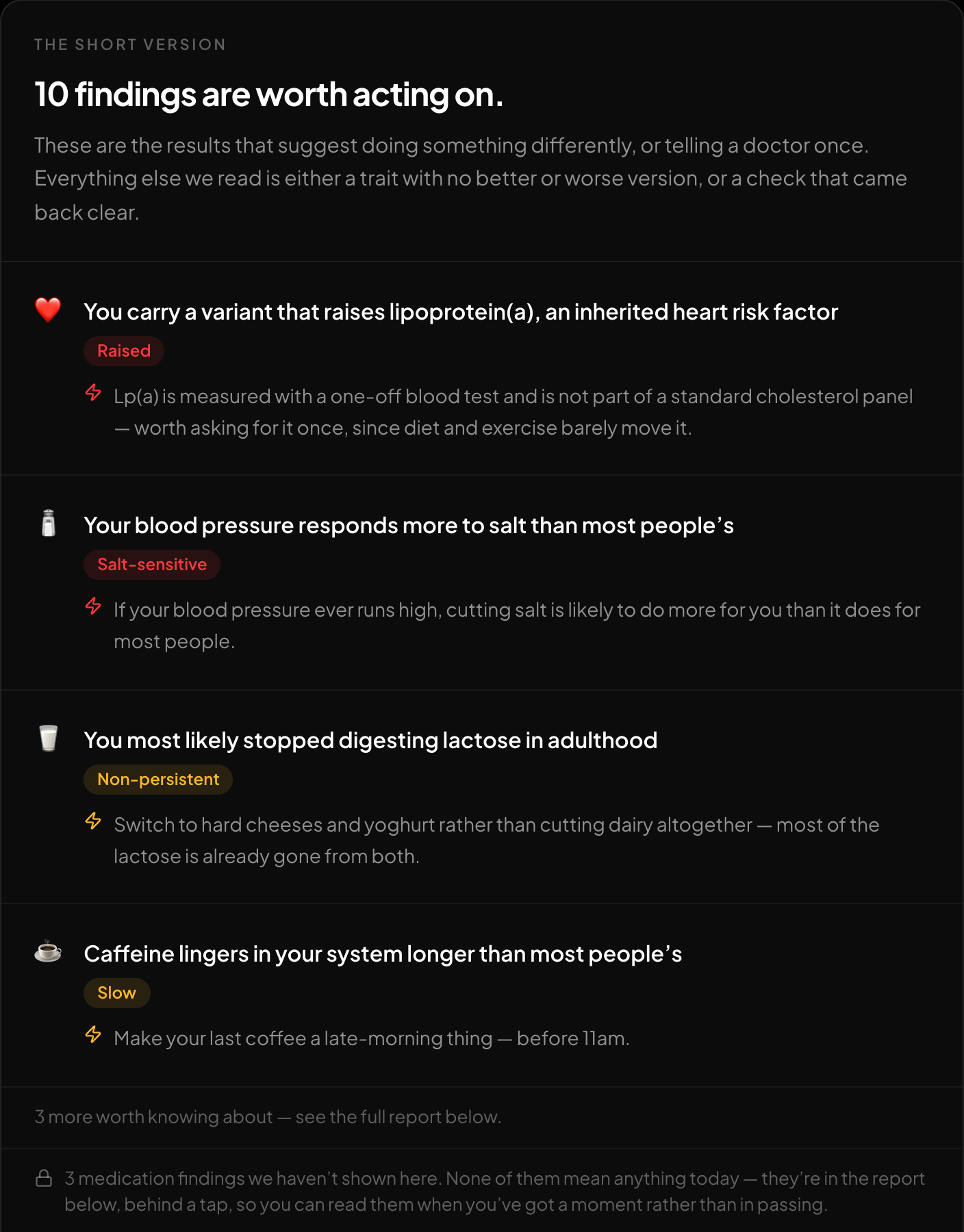
The short version: what is worth acting on, first.
If you have a raw 23andMe, AncestryDNA, MyHeritage or annotated whole-genome VCF file, the free DNA tool at https://healthosx.com/dna reads it in the browser. It reports MUTYH as a single-variant health finding alongside traits, medication response and carrier-relevant findings. Unannotated GATK or Sentieon VCF files lack rsID and gene annotations, so they cannot yield MUTYH health findings.
New to raw DNA files? Start with the full guide: How to Download & Analyze Your 23andMe Raw Data Free
Written by
HealthOS Research