What Does CHRNA5 rs16969968 Mean in My 23andMe Raw Data
The A allele at rs16969968 raises average nicotine dependence risk. Here is what A/A, A/G and G/G mean in a 23andMe raw file, and what the variant cannot predict.
# What Does CHRNA5 rs16969968 Mean in My 23andMe Raw Data
In a 23andMe raw data file, rs16969968 is a single-letter variant in the CHRNA5 gene. The A allele is the version tied to a higher average risk of nicotine dependence, and the G allele is the common reference version. If your file shows A/A or A/G, the honest read is that your nicotinic receptor is built in a way that makes nicotine more reinforcing and, on average, harder to quit. It does not mean you are addicted or destined to become so.
What does CHRNA5 rs16969968 mean in my 23andMe raw data?
When you search a 23andMe text file for rs16969968, you see one of three calls: A/A, A/G, or G/G. The letters are the bases at that spot on chromosome 15. They code for one amino acid in the alpha5 subunit of the nicotinic acetylcholine receptor.
The A version swaps an aspartate for an asparagine at position 398 of the protein, usually written D398N. That small change makes the receptor less effective at one specific job: sending the aversive stop signal that normally tells the brain a nicotine dose is too high.
The result is a weaker brake. A person with one or two A alleles is less likely to feel the unpleasant effects that limit smoking or vaping, so each nicotine exposure does less to shut itself off.
How to read the report phrase about putting nicotine down
A report that calls this "how hard nicotine would be to put down" is not reading your future. It is reporting the average difference between genotype groups.
| Genotype | Risk allele copies | What it means on average |
|---|---|---|
| G/G | 0 | Lower genetic susceptibility from this marker |
| A/G | 1 | Intermediate difficulty and intake |
| A/A | 2 | Higher average cigarettes per day and quit difficulty |
Scroll the table sideways for the rest →
Population averages, not a personal diagnosis.
The common mistake is reading A/A as "I am addicted" or G/G as "I am safe." That is wrong. This marker moves the odds a little, not the outcome. It is common to carry at least one A allele. The effect is real but small at the individual level, which is why it is only useful as one piece of a large picture.
What the numbers actually show
In large European-ancestry cohorts, each copy of the A allele has been linked to roughly one additional cigarette per day on average, though the exact estimate varies. Two copies are overrepresented among heavily dependent smokers compared with never-smokers. The effect is dose-dependent: A/A, then A/G, then G/G on average.
The signal is strongest for smoking quantity and difficulty quitting. It also appears in lung cancer and COPD risk, but that is partly because people with the risk allele tend to smoke more. The direct cancer effect, if any, is harder to separate.
The A allele raises the odds. It does not write the ending. Most people with it never become nicotine-dependent, and people without it still can.
What this cannot tell you
This variant cannot tell you whether you are addicted. It cannot tell you how hard quitting will be for you specifically this year. It cannot tell you that vaping or smoking is safe for a G/G carrier. It cannot tell you which cessation drug will work.
The clearest limitation is ancestry. The effect size usually cited comes mostly from European-ancestry cohorts. In other populations, the same A allele is sometimes rarer, and the nearby genetic background differs enough that the risk estimate does not transfer cleanly.
Another limitation is that nicotine dependence is polygenic. CHRNA5 rs16969968 is one of the better-studied variants, but it explains only a few percent of the variance. Your age of first nicotine use, social environment, mental health history and other genes usually matter more than this single marker.
What should I actually do if I have the A allele?
The practical use is simple. If you use nicotine, and you already know it is hard to stop, this variant tells you one reason why. It does not change the core options: structured cessation support, nicotine replacement, varenicline or bupropion where appropriate, and repeated attempts. The variant is not strong enough to pick a drug by itself.
If you have never used nicotine, the A allele is not a reason to avoid it more than any other person should. It is a reason to know that, for you, trying it once may carry slightly more pull than it would for someone without the risk allele.
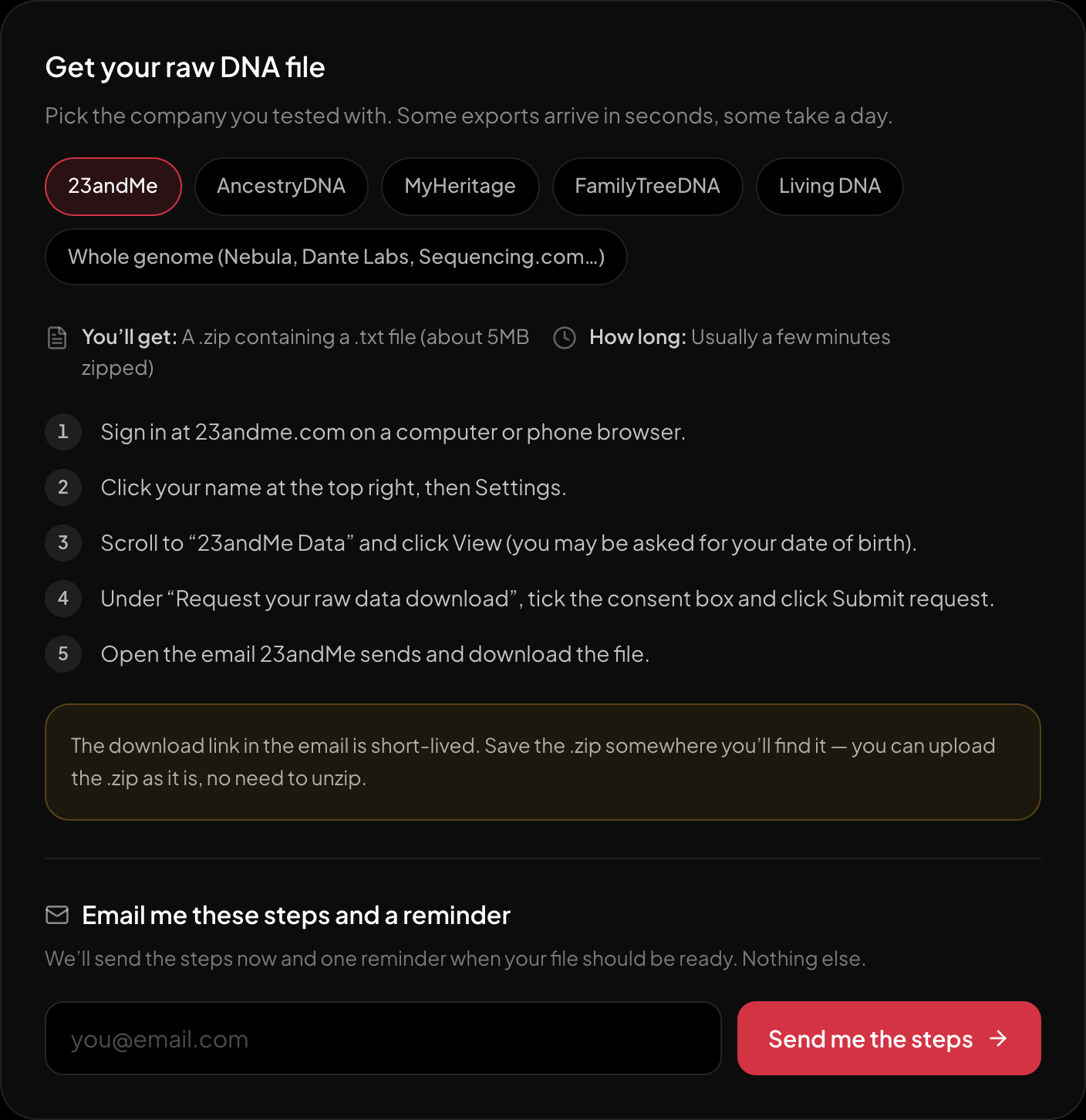
The download steps for 23andMe, on the page itself.
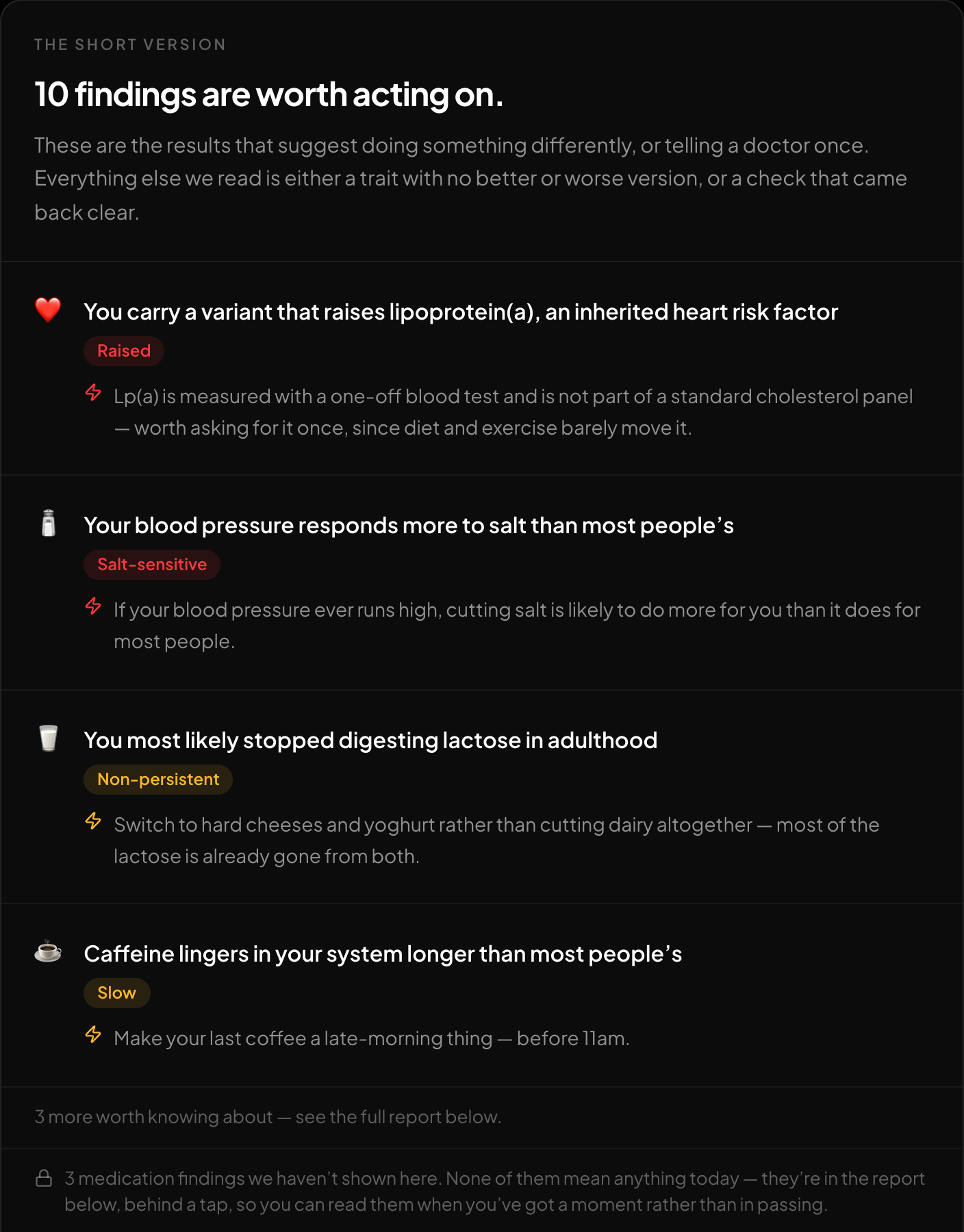
The short version: what is worth acting on, first.
For the practical readout in your own raw 23andMe file, the free DNA tool at HealthOS parses the file in your browser and reports CHRNA5 alongside medication response, carrier-relevant findings and ancestry. No account is needed to see the initial story.
New to raw DNA files? Start with the full guide: How to Download & Analyze Your 23andMe Raw Data Free
Written by
HealthOS Research