What AHR rs4410790 Means in Your 23andMe Raw Data
AHR rs4410790 in 23andMe raw data is linked to how much coffee you naturally want, not caffeine clearance.
At rs4410790, the C allele is the one repeatedly linked to slightly higher coffee intake in large genetic studies. If your 23andMe raw data says C;C, your genetic push sits at the high end. C;T sits in the middle. T;T sits at the low end. This marker is about how much coffee you naturally want, not how quickly caffeine leaves your body.
What AHR rs4410790 means in my 23andMe raw data?
The marker rs4410790 is intronic within the AHR gene. When 23andMe reads this marker, it reports two alleles, C and T. You got one from each parent, so your file will show one of three genotypes:
- C;C: two copies of the allele linked to higher coffee intake
- C;T: one copy
- T;T: no copies of the intake-raising allele
If the file says T;C instead of C;T, it means the same thing for this marker. Order does not matter.
The effect is a shift in tendency, not a switch. In European-ancestry cohorts, each C allele has been linked to roughly 0.1 to 0.2 extra cups of coffee per day on average. That range is approximate and comes from those cohorts, not a universal effect. It is a small nudge across a population. It will not look like a six-cup habit written into your DNA.
| Genotype | What it tips toward | What it does not say |
|---|---|---|
| C;C | Higher average coffee intake | Does not mean you need coffee or are addicted |
| C;T | Intermediate | Does not mean half a cup exactly |
| T;T | Lower average coffee intake | Does not mean you dislike coffee |
Scroll the table sideways for the rest →
Population averages, not individual predictions.
It changes wanting, not clearing
The most common mistake is reading this as a caffeine metabolism result. It is not. Caffeine clearance in the liver is handled mainly by the CYP1A2 enzyme. AHR is on chromosome 7 and CYP1A2 is on chromosome 15, so they are not physically adjacent. Instead, AHR regulates CYP1A2, which is why some reports group them as a biological pathway.
AHR is the aryl hydrocarbon receptor, a transcription factor. It helps switch on a set of detox genes, including CYP1A1 and CYP1A2. rs4410790 is intronic within AHR, likely in a regulatory region, so it probably changes how much AHR is expressed in some tissue, not the shape of the AHR protein. That change may feed into the systems that make coffee feel rewarding or habitual.
The association is strongest for coffee specifically. In some cohorts, the same allele shows a weaker or absent link with tea or total caffeine. That supports the idea that this is about coffee seeking, not just caffeine molecules passing through.
The exact chain from rs4410790 to coffee intake is still argued about. What the genetic association shows clearly is that this variant tracks with intake, not with a clinically useful measure of caffeine half-life. If you want to know whether caffeine stays in your system longer, you are asking about a different marker.
AHR rs4410790 nudges how much coffee you naturally want. It does not tell you whether a cup at 8pm will keep you awake.
What the data does and does not look like
In a 23andMe raw data file, you search rs4410790 and see a line with your two alleles. There is no red or green warning. There is no lab test behind it. It is just a genotype. If the line shows -- or a no-call, that just means the chip could not read that marker, not that you lack it.
A C;C result can show up in someone who drinks one cup on alternate days. A T;T result can show up in someone who drinks five cups. The genotype is one influence among many: taste preference, social habits, job, sleep, anxiety, medication, gut feelings after coffee, and plain habit.
What this marker cannot tell you:
- whether caffeine keeps you awake at night
- whether coffee raises your blood pressure
- whether you are caffeine dependent
- how much caffeine is in your blood at any hour
- what you will actually drink on Tuesday morning
Does this mean coffee is good or bad for me?
No. rs4410790 says nothing about whether coffee harms or helps you. It does not measure heart rhythm, blood pressure, migraine risk, anxiety or sleep quality. It also does not diagnose caffeine dependence.
If coffee makes you feel jittery, that should win over your genotype. If you sleep worse after a late cup, that should win too. The marker is descriptive: it describes a small average difference in how much coffee people choose, not how your body tolerates it.
What if you want the clearance answer?
That is a separate question. Look for the CYP1A2 marker in your report. The common one people mean is CYP1A2 rs762551, a different SNP with a different job. Caffeine clearance is mostly CYP1A2. rs4410790 is not that marker, even when a report groups it under the same AHR/CYP1A2 pathway label.
Most of the effect estimates for rs4410790 come from cohorts of mostly European ancestry. In other ancestries the same allele may not show the same association. The haplotype structure differs, and drinking patterns differ.
Where to see this in your own numbers
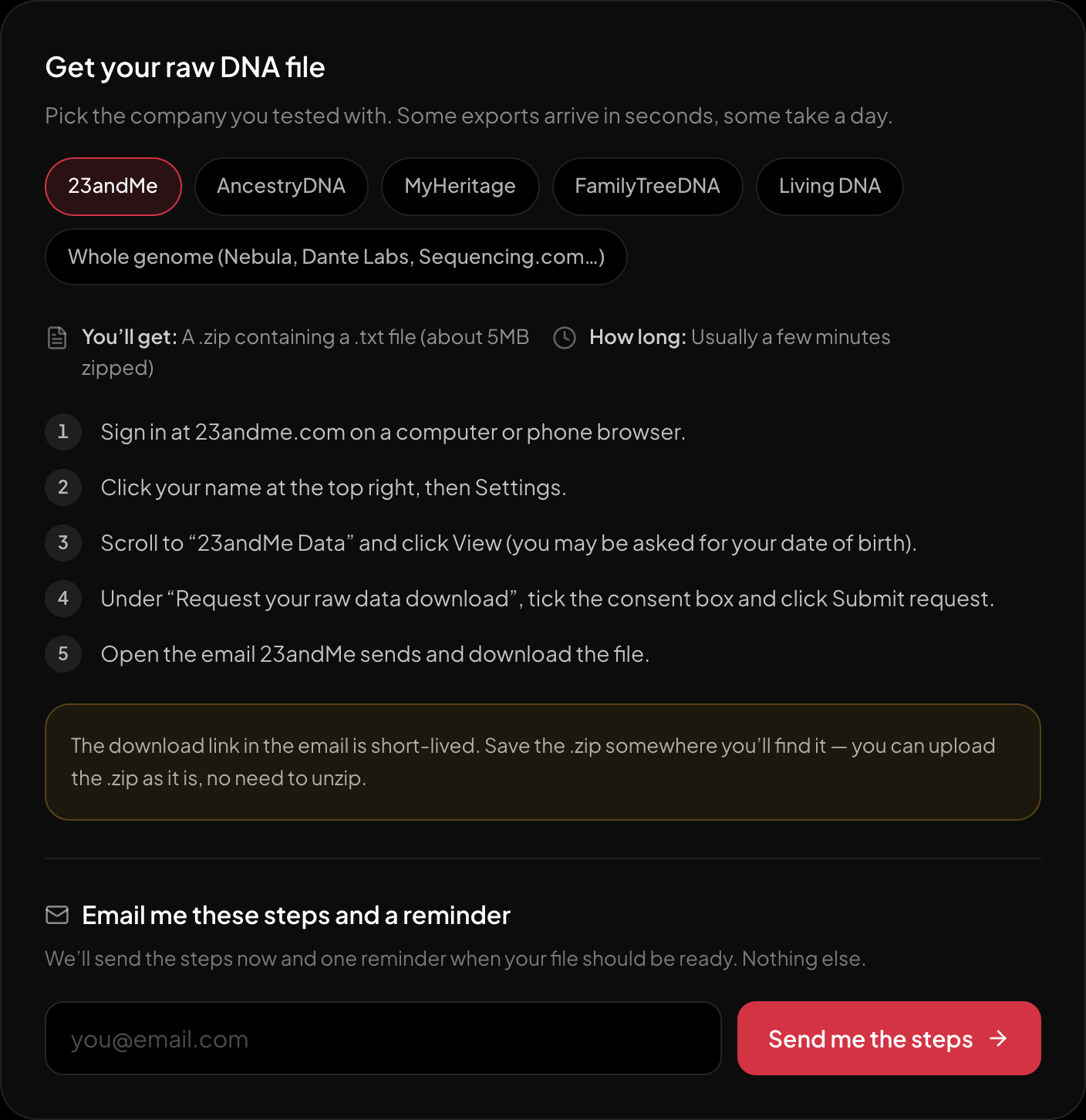
The download steps for 23andMe, on the page itself.
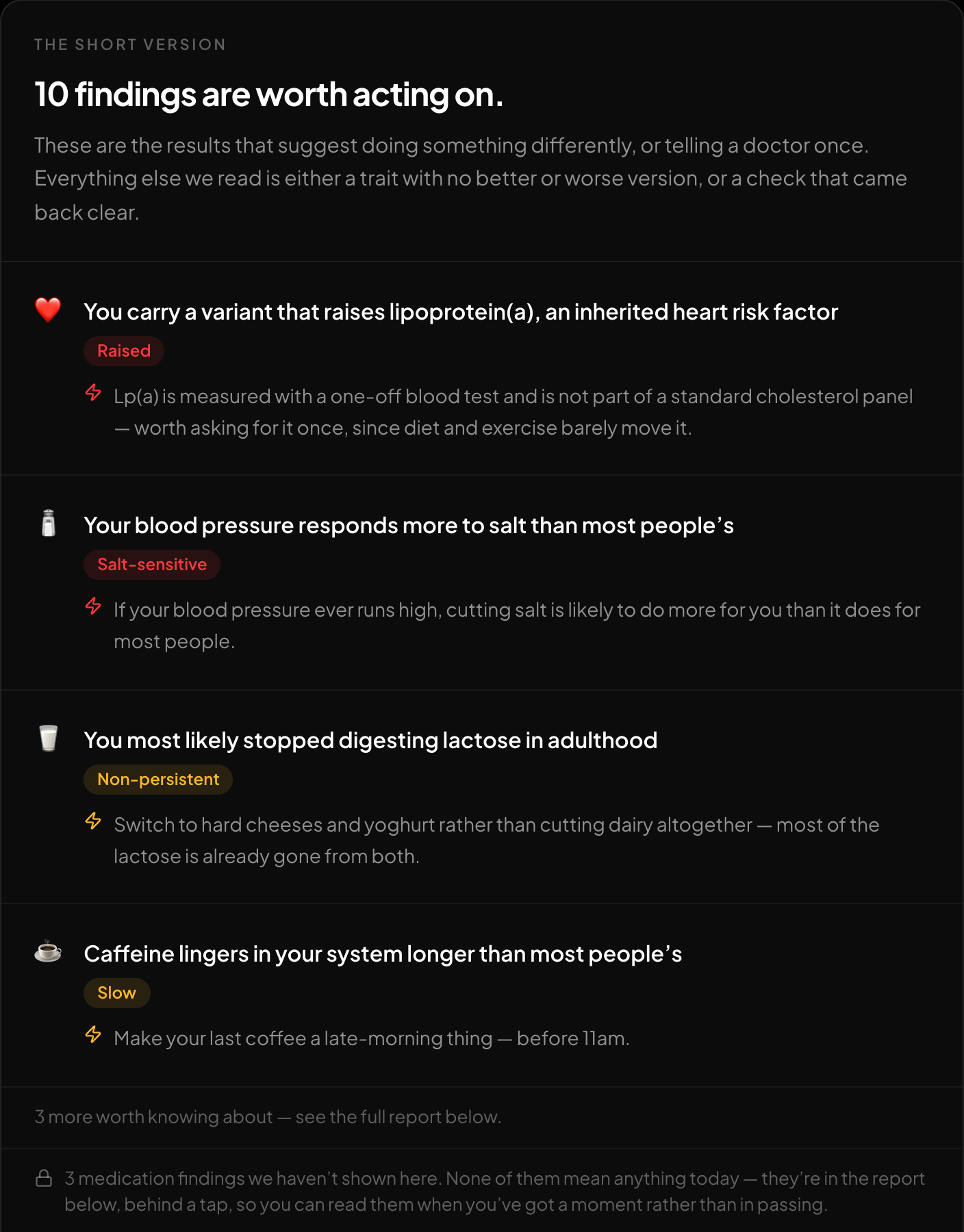
The short version: what is worth acting on, first.
The free DNA tool at https://healthosx.com/dna reads a raw 23andMe, AncestryDNA, MyHeritage or annotated whole-genome VCF file in the browser. Health findings require rsID annotations, so an unannotated VCF cannot produce them. It reports the AHR/CYP1A2 pathway grouping, a HealthOS finding label, as 'How much coffee you naturally want', and it keeps this separate from the CYP1A2 caffeine-clearance finding. If you still have your raw file, that is where to check this marker alongside your other results.
New to raw DNA files? Start with the full guide: How to Download & Analyze Your 23andMe Raw Data Free
Written by
HealthOS Research