What ADD1 rs4961 Means in Your 23andMe Raw Data
rs4961 T is the 460Trp allele in ADD1. It is a modest salt-sensitivity marker for blood pressure, not a diagnosis.
rs4961 is a single-letter change in the ADD1 gene. In raw 23andMe data the letters are usually G and T. T is the 460Trp allele, the one linked to salt-sensitive blood pressure. If your genotype is G/T or T/T, you carry that version. It is a tendency, not a diagnosis, and it says nothing by itself about your current blood pressure.
T is the salt-sensitive 460Trp allele. It shifts how much your blood pressure may respond to sodium, not whether you have high blood pressure.
What does ADD1 rs4961 mean in my 23andMe raw data?
In a 23andMe file, search for rs4961. You will see one of three pairs: G/G, G/T, or T/T. Gly and Trp are amino acids at position 460 of the alpha-adducin protein. The DNA letter change is G to T at rs4961.
| Genotype | Protein version | What it tends to mean |
|---|---|---|
| G/G | Gly/Gly | Baseline salt handling. No added sensitivity from this marker. |
| G/T | Gly/Trp | One 460Trp copy. Some studies report a modestly larger response; evidence is mixed. |
| T/T | Trp/Trp | Two 460Trp copies. May show the largest shift in studies that find an effect. |
Scroll the table sideways for the rest →
The effect size is modest. Some studies report a few mmHg greater systolic rise on high sodium, but evidence is mixed; T/T may show the largest shift in studies that find an effect. This is not 30 mmHg. It is the kind of difference that matters over years and in combination with everything else.
How the 460Trp allele changes salt handling
ADD1 codes for alpha-adducin, a protein in the kidney's tubule cells. Alpha-adducin helps anchor the sodium-potassium pump at the cell membrane. The 460Trp version changes how that pump is held and operated. One proposed explanation from cell and animal work is that the kidney reabsorbs more sodium from urine into the blood instead of excreting it. Sodium drags water with it. More retained volume means the same salty intake may increase blood pressure a little more. This is a proposed explanation, not an established human mechanism.
This is why the same salt intake does not move everyone the same. The gene is one part of that difference.
What the result does not mean for your blood pressure today
rs4961 is not a blood pressure reading. It does not tell you that your blood pressure is normal, high, or low. It does not mean salt is the main cause of your blood pressure. Most blood pressure risk is built from age, weight, fitness, sleep, alcohol, and many common gene variants, each with small effects.
- A T/T result with a measured blood pressure of 110/70 does not mean you secretly have high blood pressure.
- A G/G result with a measured blood pressure of 145/95 still means the reading is high.
- This marker adds information about salt tendency, not a replacement for an actual cuff measurement.
The strength of the ADD1-sodium link has varied by study population. Some studies show a clear association, some show little, and baseline blood pressure changes the picture. Treat it as a modifier, not a verdict.
What should I actually do with this result?
Start from your measured blood pressure, not from rs4961. If your blood pressure is elevated, reducing sodium is one evidence-based lever, and this result suggests your lever may move a little more than average if you carry T. It does not mean you should avoid salt entirely, and it does not mean you can skip medication if your clinician has prescribed it.
- Measure blood pressure at home under the same conditions before caffeine or exercise.
- If you carry T, pay attention to how your blood pressure changes after very salty days.
- Use the result as a reason to test your own response, not as a label.
Will cutting salt fix my blood pressure?
Not on its own. Sodium reduction typically lowers systolic blood pressure by a few mmHg in people who are salt-sensitive, and maybe less across everyone. If your starting pressure is 140/90, that can help, but it rarely fixes the whole problem. Weight loss, sleep, activity, and medication when needed all move the same number. The gene result tells you one reason your response may differ from someone else's, not that one change is enough.
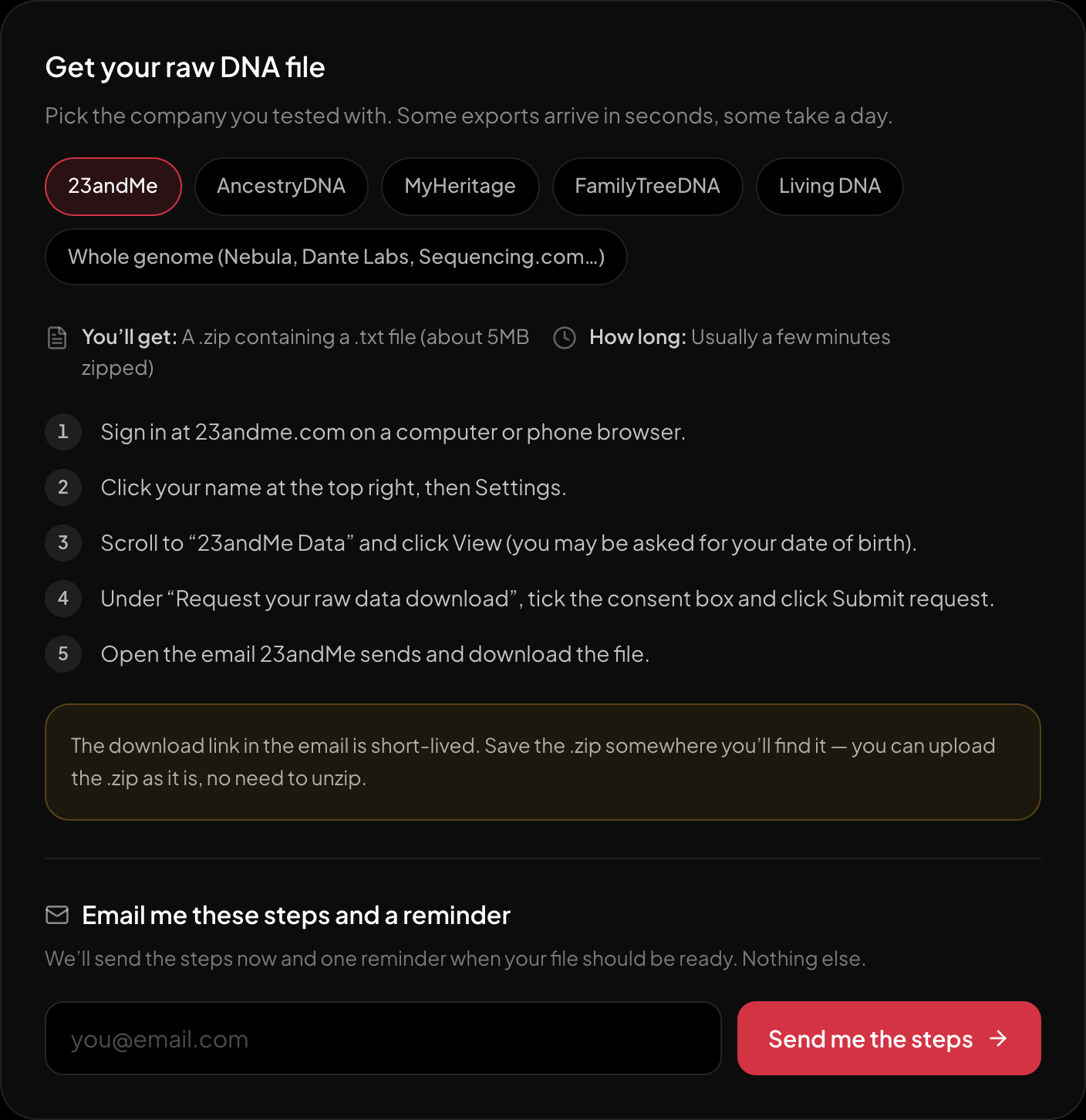
The download steps for 23andMe, on the page itself.
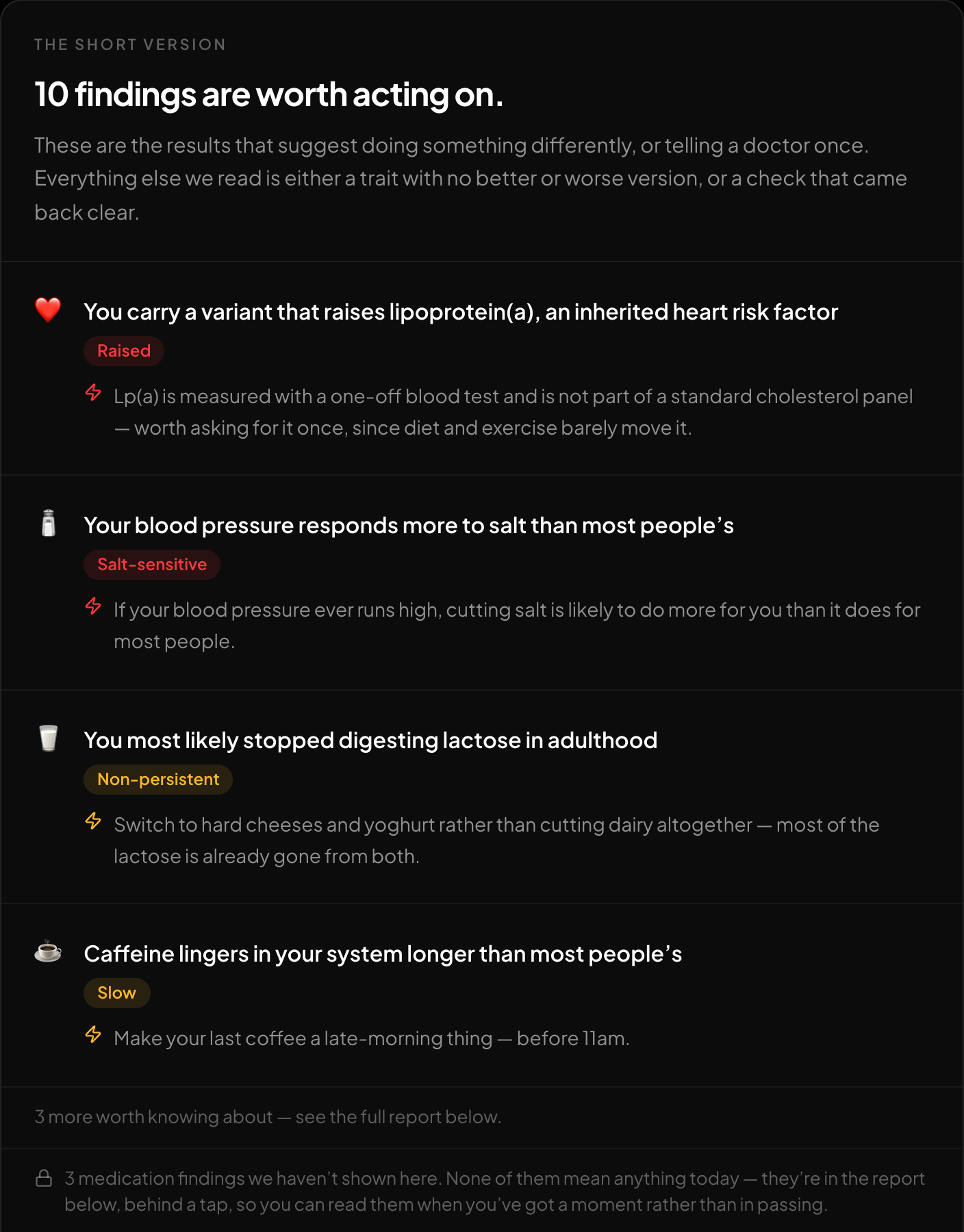
The short version: what is worth acting on, first.
To see this in your own numbers, upload your raw DNA file to the free tool at healthosx.com/dna. It reads 23andMe, AncestryDNA, MyHeritage and whole-genome VCF files in the browser, and its report lists ADD1 as 'How much your blood pressure cares about salt'.
New to raw DNA files? Start with the full guide: How to Download & Analyze Your 23andMe Raw Data Free
Written by
HealthOS Research