What TCF7L2 Means in Your 23andMe Raw Data
TCF7L2 in your 23andMe raw data usually appears as rsIDs such as rs7903146 and rs12255372. Here is how to read rs7903146 and what it does and does not mean for diabetes risk.
TCF7L2 is a gene, not a set of markers. In your raw 23andMe data, TCF7L2 usually appears as rsIDs such as rs7903146 and rs12255372, so you need to look up those specific TCF7L2-linked variants, most notably rs7903146, rather than searching for the gene name.
What does TCF7L2 mean in my 23andMe raw data?
When you open your raw file and search for TCF7L2, you may not see a gene name at all. You will see SNP IDs. The most studied TCF7L2 marker is rs7903146, and it appears on many 23andMe versions.
| Genotype | Risk copies | What it suggests |
|---|---|---|
| CC | 0 | Lower genetic push from this variant |
| CT | 1 | Intermediate genetic push |
| TT | 2 | Strongest genetic push from this variant |
Scroll the table sideways for the rest →
For rs7903146, T is the risk allele on the reference orientation. Some chips or builds can make the letters look reversed, so do not manually flip calls without a trusted report.
The gene itself, transcription factor 7-like 2, is involved in pancreatic beta-cell function and GLP-1-related signalling. The T allele at rs7903146 is associated with higher Type 2 diabetes risk and may affect insulin and GLP-1-related glucose handling, especially after refined carbohydrate loads. The risk allele is not a broken gene. It is a risk-associated variant, not a diagnosis.
The TCF7L2 risk allele does not mean carbs are bad for you. It means your glucose response to a refined carb load may deserve closer attention.
How to read your genotype
Search your raw data file for rs7903146. The letters you see are usually C or T. The T is the risk allele. CC means no risk copies, CT means one, TT means two. For rs12255372, the direction is the same: T is the risk allele.
Some chips and genome builds report the opposite strand, so letters can look reversed, such as A and G instead of C and T. Do not manually flip calls without a trusted report that handles strand and build for you.
What this does and does not mean for diabetes risk
Population studies often report that each copy of the T allele at rs7903146 is associated with higher Type 2 diabetes risk, but the size varies by ancestry and study. These are illustrative relative-risk examples, not a personal risk multiplier. The variant is one of the strongest common variants known for Type 2 diabetes, but it is not a diagnosis.
The number that matters more is your starting absolute risk. For example, if a validated model puts your lifetime risk at 10 percent, an illustrative one-copy relative-risk increase might move it to 14 percent. If the same model starts at 40 percent, the same illustrative increase might move it to 56 percent. These are teaching examples only. A single variant relative-risk estimate should not be multiplied onto a personal lifetime risk without a validated model that accounts for ancestry, age, body composition, fasting glucose, HbA1c, and family history.
Illustrative one-copy relative-risk example only. A single variant relative-risk estimate should not be multiplied onto personal lifetime risk without a validated model.
This is why the same TCF7L2 result can sit quietly in one person and show up early in another. The variant is associated with differences in how sensitive your glucose handling is to everything else.
The common mistake: treating one gene as fate
People get TCF7L2 wrong in two directions. Some see 'diabetes gene' and assume they will get diabetes. Others see a low-risk genotype and assume refined carbs are safe for them. Neither is true. The gene is a modifier. It is associated with a different relationship between carbohydrate load, insulin response and weight, but it does not override fasting glucose, HbA1c, waist size, age, sleep, activity or what else runs in your family.
A more useful read: if you have a T allele and your fasting glucose or HbA1c is starting to drift, the same amount of refined carbs may be costing you more than it costs someone without the T allele. That can be seen in continuous glucose monitor data as a higher peak or slower return after a high-carb meal.
So do I have diabetes?
No single gene answers that. Diabetes and prediabetes are diagnosed with blood tests: fasting glucose, HbA1c, or an oral glucose tolerance test. A TCF7L2 risk allele tells you which direction your body is biased. It does not tell you where you are on the path. If you have a risk allele and want to know where you are, the next step is a cheap blood test, not another DNA test.
What the free report does with this gene
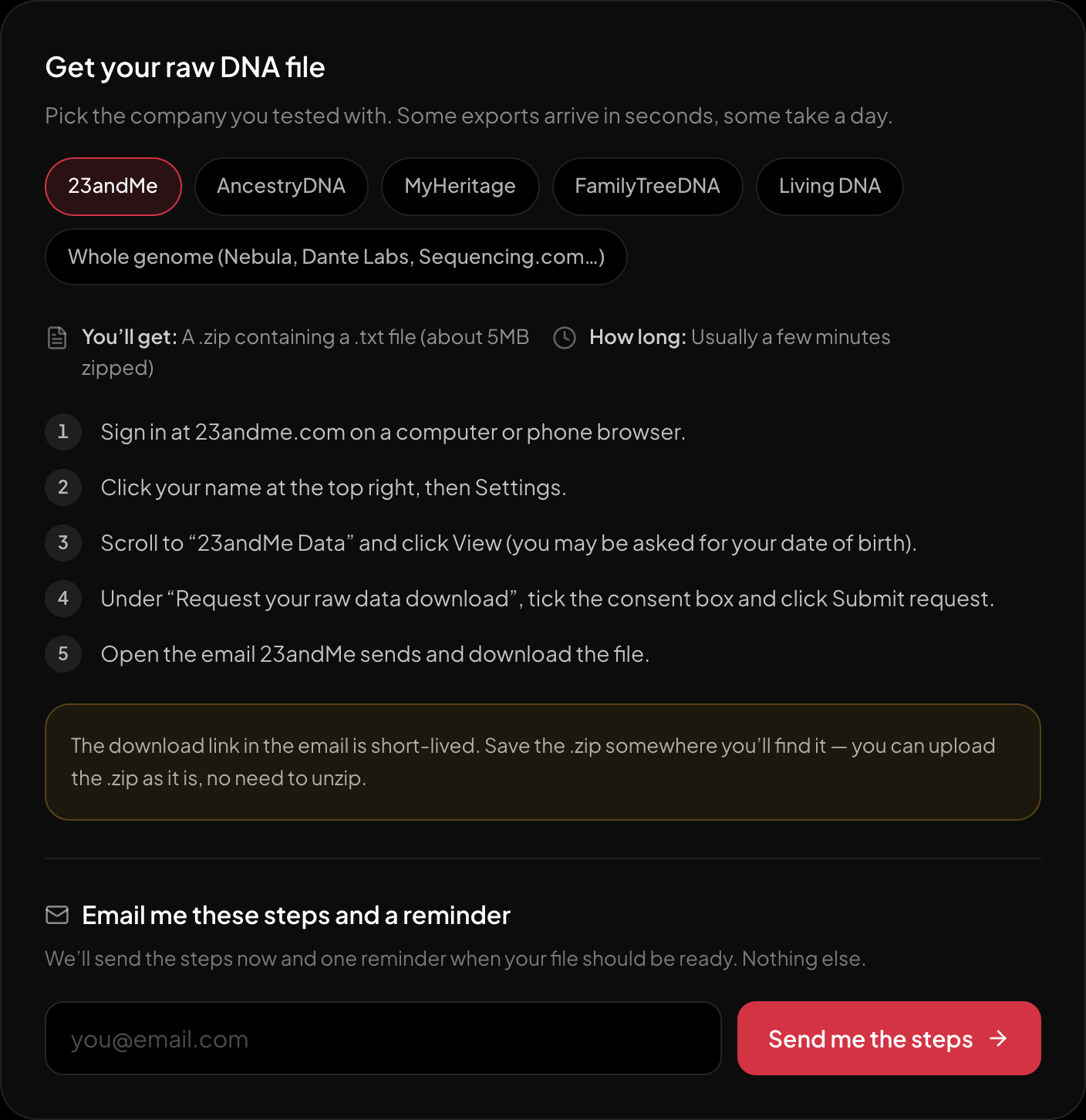
The download steps for 23andMe, on the page itself.
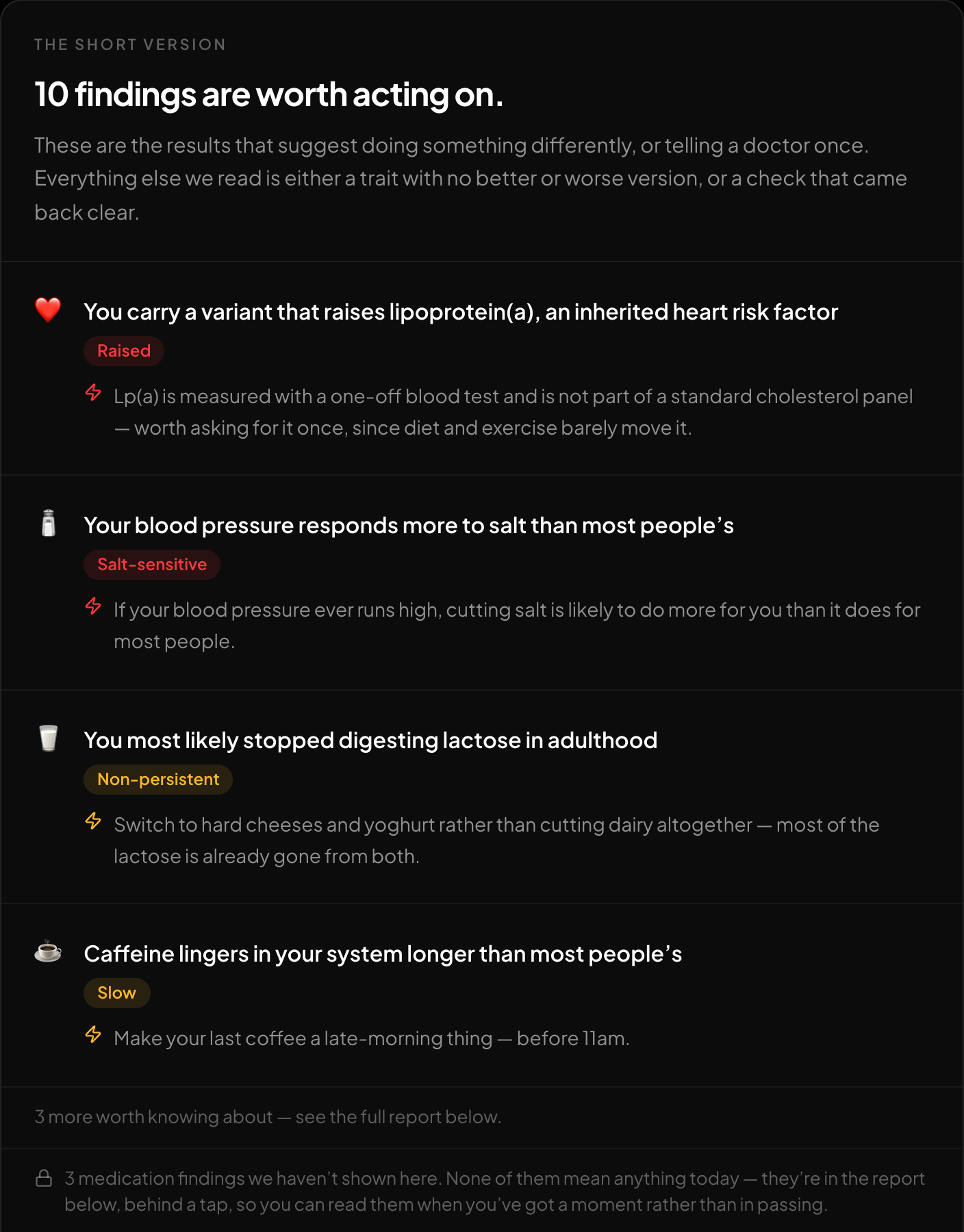
The short version: what is worth acting on, first.
To see your own TCF7L2 result, the free HealthOS DNA report reads a raw 23andMe, AncestryDNA, MyHeritage, FamilyTreeDNA, Living DNA, WeGene, or whole-genome VCF file in the browser, and the DNA story needs no account. A VCF without rsIDs gets ancestry only, so TCF7L2 needs rsIDs. It shows TCF7L2 as 'How much your body cares about refined carbs'. It does not give a polygenic risk score, and it does not diagnose diabetes.
New to raw DNA files? Start with the full guide: How to Download & Analyze Your 23andMe Raw Data Free
Written by
HealthOS Research