What HLA-DQ2.5 Means in My 23andMe Raw Data
A positive HLA-DQ2.5 or DQ8 call in 23andMe raw data means celiac is possible, not that you have it. Here is how to read the result without overreading it.
If your raw 23andMe file is reported as HLA-DQ2.5 positive, it means one or more tag SNPs near HLA-DQA1/DQB1 suggest you may carry the celiac-associated HLA type. It does not mean you have celiac disease.
What does HLA-DQ2.5 mean in my 23andMe raw data?
The raw 23andMe file itself does not contain the words "HLA-DQ2.5". It is a list of rsIDs, chromosome positions and genotype letters. When a report labels you as HLA-DQ2.5 positive, the tool has inferred that from one or more tag SNPs near HLA-DQA1/DQB1. The tag SNPs sit close enough to the high-risk HLA type that a marker pattern usually travels with it. It is a prediction from markers, not full HLA typing.
Different chip versions can use different tag SNPs for the same HLA region. If you search the raw text file for "HLA" you may find nothing, because raw files use rsIDs, not gene names.
A positive HLA-DQ2.5 or DQ8 result makes celiac disease possible. It does not make it probable, and it never replaces serology or a duodenal biopsy.
What possible results mean
- Positive DQ2.5 or DQ8 tag-SNP result means the tested markers suggest you may carry a celiac-associated HLA type. Celiac disease is possible. Tag-SNP inference is less complete than clinical HLA typing, so exact copy number may not be certain.
- Negative tag-SNP result makes celiac disease unlikely but cannot replace clinical assessment when symptoms persist.
- No call is uninformative. The chip failed to read the marker, and missing data should not be read as low risk.
Illustrative prevalence only, not individual risk. The 35 per cent bar is carrier prevalence. The 1 per cent bar reflects general celiac prevalence, not risk for every carrier. Carrier prevalence estimates range roughly 30 to 40 per cent.
One copy of a celiac-associated HLA type is enough to make celiac possible. Two copies of DQ2.5 may push genetic risk higher, but the absolute risk remains low. Since tag-SNP inference is less complete than clinical HLA typing, copy number is best treated as approximate.
Why carrying DQ2.5 is a door, not a diagnosis
Strictly, HLA-DQ2.5 is a protein pair encoded by DQA105 and DQB102. DQ8 is a different pair, from DQA103 and DQB103:02. These molecules sit on immune cells and show small pieces of protein to T cells. DQ2.5 and DQ8 have a binding groove that happens to hold deamidated gluten peptides tightly. In celiac disease, tissue transglutaminase in the gut converts some gluten glutamine residues to glutamic acid. That small shape change makes the gluten fragment fit the HLA groove better, which can trigger the T-cell attack that inflames the small bowel.
This is a molecular door. About 30 to 40 per cent of people with European ancestry carry DQ2.5 or DQ8. Only about 1 per cent of people develop celiac disease. So the door is common, but walking through it is not.
What to do if you carry it
The obvious follow-up question is whether to stop eating gluten. If you are considering celiac testing, the usual advice is to keep eating gluten until testing is complete. Celiac blood tests and duodenal biopsy look for the immune response and gut damage that happen while gluten is in the diet. If you remove gluten first, anti-tTG IgA can fall and the biopsy can look normal. That creates a false-negative result.
If you have symptoms such as diarrhea, bloating, anemia, fatigue, weight loss, an itchy rash or unexplained low bone density, it is worth asking a clinician about celiac serology. The standard first step is total IgA plus anti-tTG IgA, sometimes with deamidated gliadin peptide IgG if IgA is low. A positive or unclear blood result may lead to endoscopy with duodenal biopsy while gluten is still being eaten, but pathways vary by age and guideline.
Where this result gets overread
- Treating a positive HLA-DQ2.5 as a celiac diagnosis. Most carriers never develop the disease.
- Thinking a raw file HLA result is complete HLA typing. It tests specific tag SNPs, not the full HLA-DQA1 or HLA-DQB1 genes. Lower-risk types such as DQ2.2 may not be reported, and a no-call cannot rule anything out.
- Using a negative HLA result to ignore ongoing symptoms. Celiac disease without DQ2.5 or DQ8 is rare but real. Unexpected negatives should be discussed clinically.
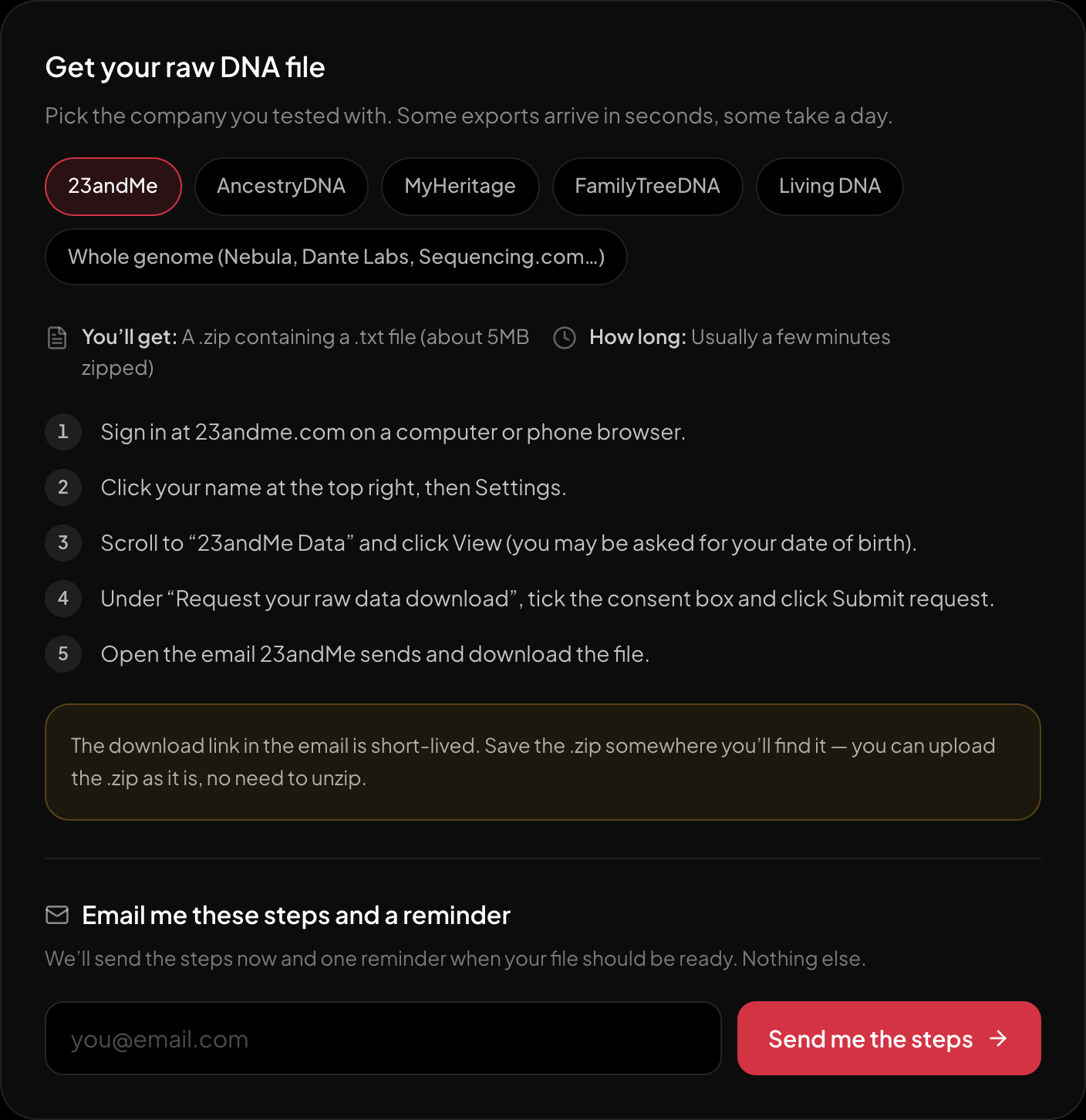
The download steps for 23andMe, on the page itself.
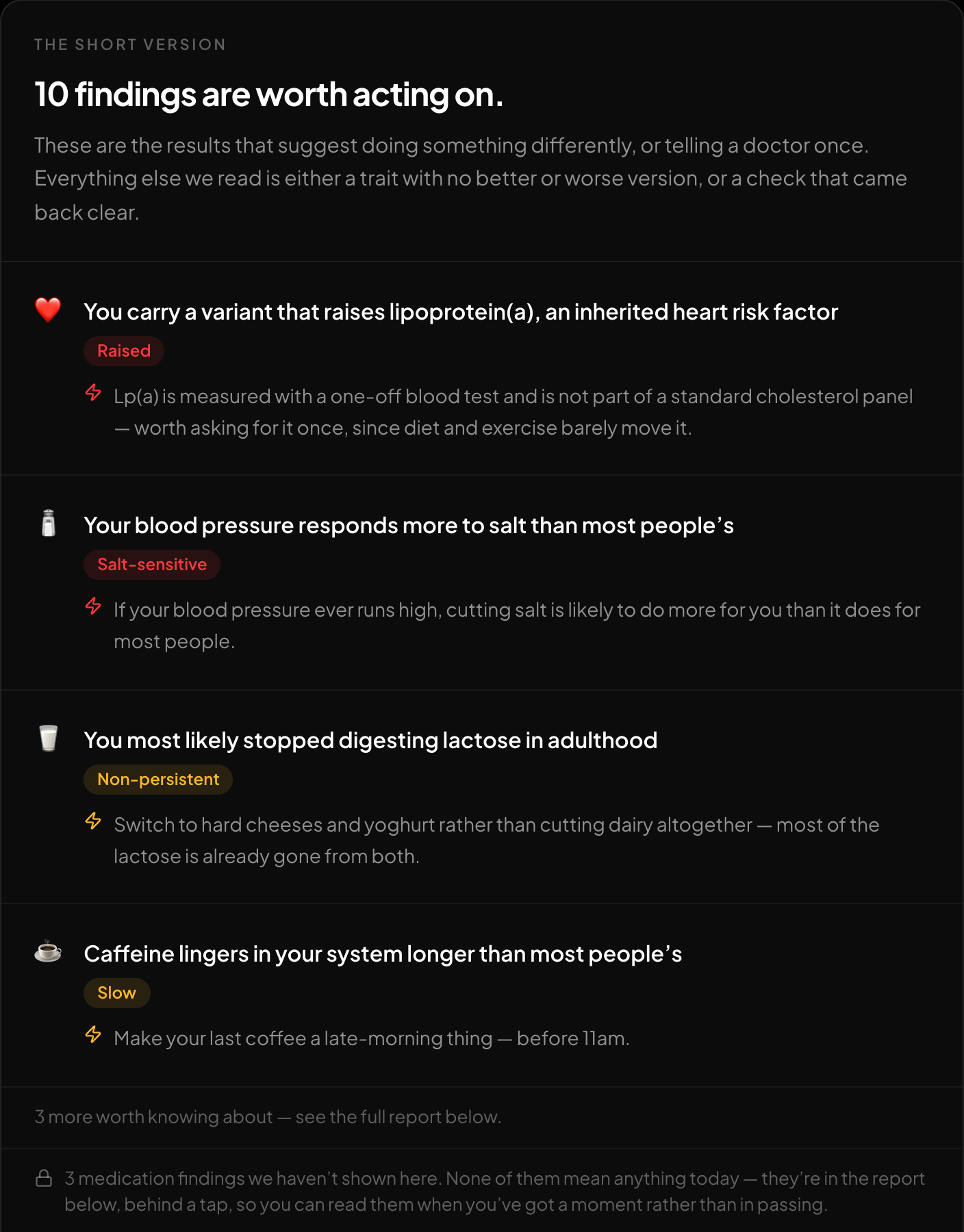
The short version: what is worth acting on, first.
A VCF without rsIDs gets ancestry only; the HLA-DQ2.5/DQ8 trait needs rsIDs. To see how your own file falls on the celiac-associated HLA types, upload your raw 23andMe, AncestryDNA, MyHeritage, FamilyTreeDNA, Living DNA, WeGene or whole-genome VCF at the HealthOS DNA tool. The HealthOS report includes HLA-DQ2.5/DQ8 as a finding that tells whether celiac disease is even possible. The file is read in your browser, free, and your DNA story needs no account; the full report, where this finding sits, opens in the HealthOS app after a 6-digit code sent to your email.
New to raw DNA files? Start with the full guide: How to Download & Analyze Your 23andMe Raw Data Free
Written by
HealthOS Research