What BCHE Means in My 23andMe Raw Data
BCHE is the gene for the enzyme that clears succinylcholine and mivacurium. Here is what the atypical and K variants in a 23andMe raw file mean.
If you search your 23andMe raw data for BCHE, you are looking at the gene for butyrylcholinesterase, the plasma enzyme that breaks down succinylcholine and mivacurium, two muscle relaxants used in anesthesia. Two BCHE variants that may be checked in raw-data reports are rs1799807, the atypical or A variant, and rs1803274, the K variant. Reduced-activity alleles can mean slower clearance of those drugs and a longer time before your breathing returns after surgery. It is a medication response flag, not a disease diagnosis. This BCHE finding addresses response to succinylcholine and mivacurium, not all anesthesia risks.
What does BCHE mean in my 23andMe raw data?
BCHE is the gene name for butyrylcholinesterase, also called pseudocholinesterase or plasma cholinesterase. The gene sits on chromosome 3 and makes an enzyme found mostly in the blood. That enzyme is not the acetylcholinesterase that works at the nerve junction. It is the plasma cleanup system that hydrolyzes choline esters in circulation.
What the enzyme does with succinylcholine and mivacurium
Succinylcholine and mivacurium are neuromuscular blockers. They stop muscles from responding to nerve signals for a short period so a breathing tube can be placed. Normally, plasma BChE begins breaking those drugs down almost immediately. Succinylcholine lasts about 5 to 10 minutes in most people. Mivacurium is cleared by the same enzyme. When BChE activity is low, the drug sits at the receptor longer and the muscle relaxation does not wear off on the usual schedule.
What the atypical and K variants mean in your raw file
Before using rs1799807 or rs1803274, note that these calls must be interpreted by genome build, strand, and the named effect allele. The non-reference allele is not a safe universal key.
| Raw file finding (illustrative) | Variant | Expected BChE effect |
|---|---|---|
| rs1799807, one copy of the atypical allele as defined for your build | Atypical / A | May reduce BChE activity; clinically important prolonged apnea is mainly seen with two reduced-function alleles or compound heterozygosity |
| rs1799807, two copies of the atypical allele as defined for your build | Atypical / A | Severely low activity; apnea can last hours |
| rs1803274, one copy of the K allele as defined for your build | K variant | Mild reduction; effect depends on zygosity and other variants |
| rs1803274, two copies of the K allele as defined for your build | K variant | Milder reduction than atypical; effect depends on zygosity and co-occurring variants |
| No usable call for that rsID | No result; do not read as normal | Absence may be a no-call or not reported, not evidence of normal activity |
Scroll the table sideways for the rest →
Illustrative only. Interpret rs1799807 and rs1803274 by genome build, strand, and effect allele; do not use the non-reference allele as a universal key.
Search your file for rs1799807 and rs1803274. The raw file format is rsID, chromosome, position, genotype. A line may look like rs1799807 3 ... AG as an illustration, not a literal 23andMe line. The genotype line must be interpreted relative to the reference allele and the genome build used by that file. A missing or ambiguous call is not evidence of normal BChE activity. If one of these rsIDs is missing from your file, that specific chip did not test that marker. It does not mean you are typical. An absent call is not a normal result.
The atypical variant is the one most associated with prolonged apnea. One atypical allele can reduce BChE activity, but clinically important prolonged apnea is mainly associated with two reduced-function alleles or compound heterozygosity. With two atypical alleles, it can be severe: a standard dose can produce apnea for hours and require mechanical ventilation until the drug is cleared.
The K variant is usually milder. The effect of a single K allele may be small by itself. With two K alleles, the activity reduction is usually milder than the atypical variant, and the clinical effect depends on zygosity and any co-occurring variants. The combination of one atypical allele and one K allele can be more relevant than either alone because both lower activity.
Does my genotype mean the drug will last longer?
It depends on which variants and how many copies. Reduced-activity alleles can point toward a longer response, but the raw file cannot give you an exact number of minutes. Enzyme activity also depends on current health, liver function and the specific dose. Laboratories can measure BChE activity directly and inhibition by dibucaine. Typical BChE is strongly inhibited by dibucaine; atypical enzyme shows reduced inhibition or a lower dibucaine number. That is where the name atypical comes from. Your raw file gives the cause, not current enzyme level.
A BCHE variant is worth mentioning before anesthesia, but it does not mean you cannot have succinylcholine or mivacurium. It means the team should expect a longer pause if you do.
Should I tell an anesthesiologist?
Tell the anesthesia team about any BCHE variant, an uncertain call, or a family history of prolonged apnea after anesthesia. They can choose a different muscle relaxant, or if succinylcholine is truly needed, they can prepare for a longer pause with ventilation and monitoring ready. This is not a drug allergy and it is not malignant hyperthermia. It is a drug clearance difference.
What BCHE does not tell you
A typical-looking raw file is not a guarantee. Liver disease, pregnancy, malnutrition, some medications and rare BCHE variants the chip does not test can all lower BChE activity. If a close relative had prolonged apnea after anesthesia, mention that even if your raw file looks typical. Consumer chips do not test every rare BCHE variant. The absence of a result is not the absence of risk.
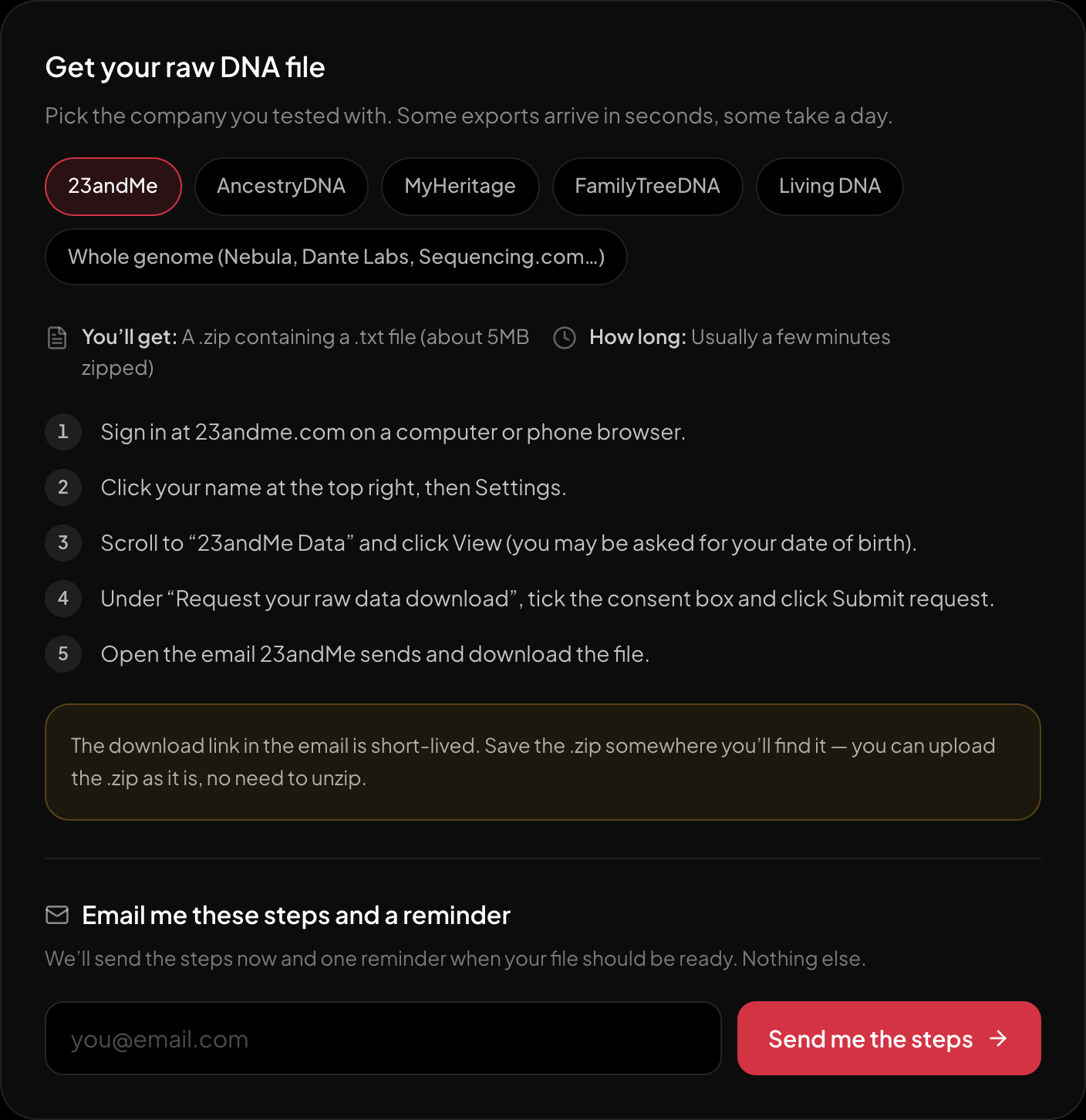
The download steps for 23andMe, on the page itself.
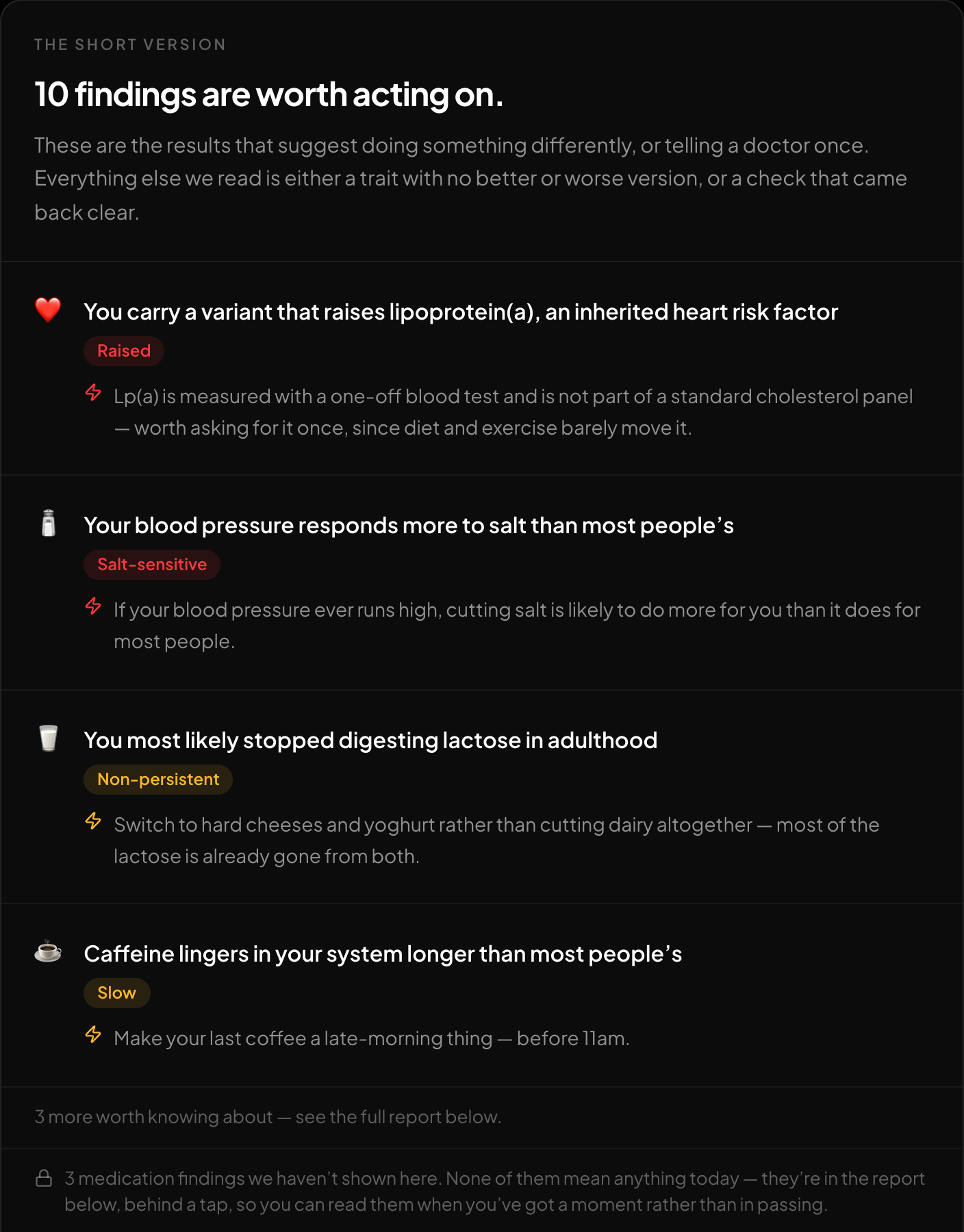
The short version: what is worth acting on, first.
The free DNA tool at HealthOS reads raw data files in the browser and reports BCHE medication responses. Medication and BCHE findings require named positions in the raw file. A whole-genome VCF with '.' in the ID column can be used for ancestry but cannot produce these health findings. The full report opens after a one-time email code. HealthOS medication response findings come from CPIC gene-drug guidance and are not a diagnosis.
New to raw DNA files? Start with the full guide: How to Download & Analyze Your 23andMe Raw Data Free
Written by
HealthOS Research