What PNPLA3 rs738409 Means in Your 23andMe Raw Data
PNPLA3 rs738409 CC, CG, and GG shows a genetic tendency for liver fat. The G allele is a background setting, not a diagnosis.
In 23andMe raw data, rs738409 is shown as CC, CG, or GG. G is the PNPLA3 liver-fat risk allele. Each G copy raises genetic tendency, but it is not a diagnosis. CC means two lower-risk copies, CG means one risk copy, and GG means two risk copies.
| Genotype | Risk allele copies | What it means |
|---|---|---|
| CC | 0 | Lower background liver fat storage |
| CG | 1 | Intermediate propensity to hold liver fat |
| GG | 2 | Strongest genetic pull toward fatty liver |
Scroll the table sideways for the rest →
G is the risk allele for liver fat tendency.
What does PNPLA3 rs738409 mean in my 23andMe raw data?
Your 23andMe file will usually show this marker as C or G. So:
- CC: no G risk allele at rs738409. CC is common in many European-ancestry groups.
- CG: one G risk allele. Intermediate liver fat tendency. CG can be the most common genotype in some Hispanic/Latino groups.
- GG: two G risk alleles. Strongest genetic pull toward liver fat storage.
But the genotype is not a diagnosis. It describes a background tendency that interacts with weight, diet, alcohol, and insulin resistance. This is one reason some lean people develop fatty liver while some obese people do not.
One G allele at rs738409 is a background setting for liver fat. It is not a current liver diagnosis.
What PNPLA3 actually does
PNPLA3 sits on the surface of lipid droplets inside liver cells. Its job is to help control how triglycerides are moved and broken down. The rs738409 change swaps isoleucine for methionine at position 148 (I148M). The I148M change is thought to impair lipid-droplet turnover. The liver does not necessarily make more fat. It may fail to clear it as easily.
PNPLA3 is expressed in liver cell types, including hepatocytes and stellate cells. In the setting of steatosis, the rs738409 G allele is associated with fibrosis risk. That is one reason this marker is linked not only to simple fat buildup, but to progression toward fibrosis and cirrhosis in some people.
CC, CG, and GG in real numbers
The effect is not tiny. In a meta-analysis, GG was associated with roughly three times the odds of hepatic steatosis compared with CC. The G allele is also common. Its frequency is around 23% in European populations and closer to 49% in some Hispanic populations, so many people carry at least one copy without knowing it.
The interaction with alcohol is also relevant. G alleles are associated with higher alcohol-related liver injury risk, especially with heavier drinking. But these are group averages. An individual CC can still develop fatty liver from fructose, weight gain, or alcohol. An individual GG can remain lean and metabolically healthy for decades. The genotype changes probability, not destiny.
Does a normal ALT or ultrasound mean you are clear?
No. Normal tests do not rule out genetic susceptibility. A person with GG can have normal liver enzymes while fat is already accumulating. Ultrasound can miss mild steatosis in some cases. Normal tests can miss early steatosis and sometimes significant fibrosis, so they do not rule out susceptibility.
If you have CG or GG and other metabolic risks, a more sensitive imaging test, such as MRI-PDFF or FibroScan, is worth asking a doctor about. Not everyone needs it. It becomes more relevant if waist circumference is high, triglycerides are high, fasting glucose is rising, or alcohol intake is regular.
What this variant does not tell you
- It does not tell you whether you currently have fatty liver.
- It does not tell you whether fibrosis or cirrhosis will develop.
- It does not tell you exactly how much alcohol or fructose is safe for you.
- It does not tell you that diet and weight loss will fail. Carriers still respond to weight loss. Weight loss can help carriers reduce liver fat.
The marker is a setting, not a switch.
What to do with this result
If you have a G allele, the evidence points in one direction. The same interventions that protect everyone's liver matter more for you. Cutting liquid fructose and limiting alcohol matter. Keeping body weight where visceral fat stays low matters too. You do not need a special PNPLA3 diet.
The practical follow-up is to ask whether your current liver risk has been measured properly. A doctor can look at your ALT, AST, platelets, plus imaging if needed. If those are done and clear, you have gained useful genetic context without losing anything.
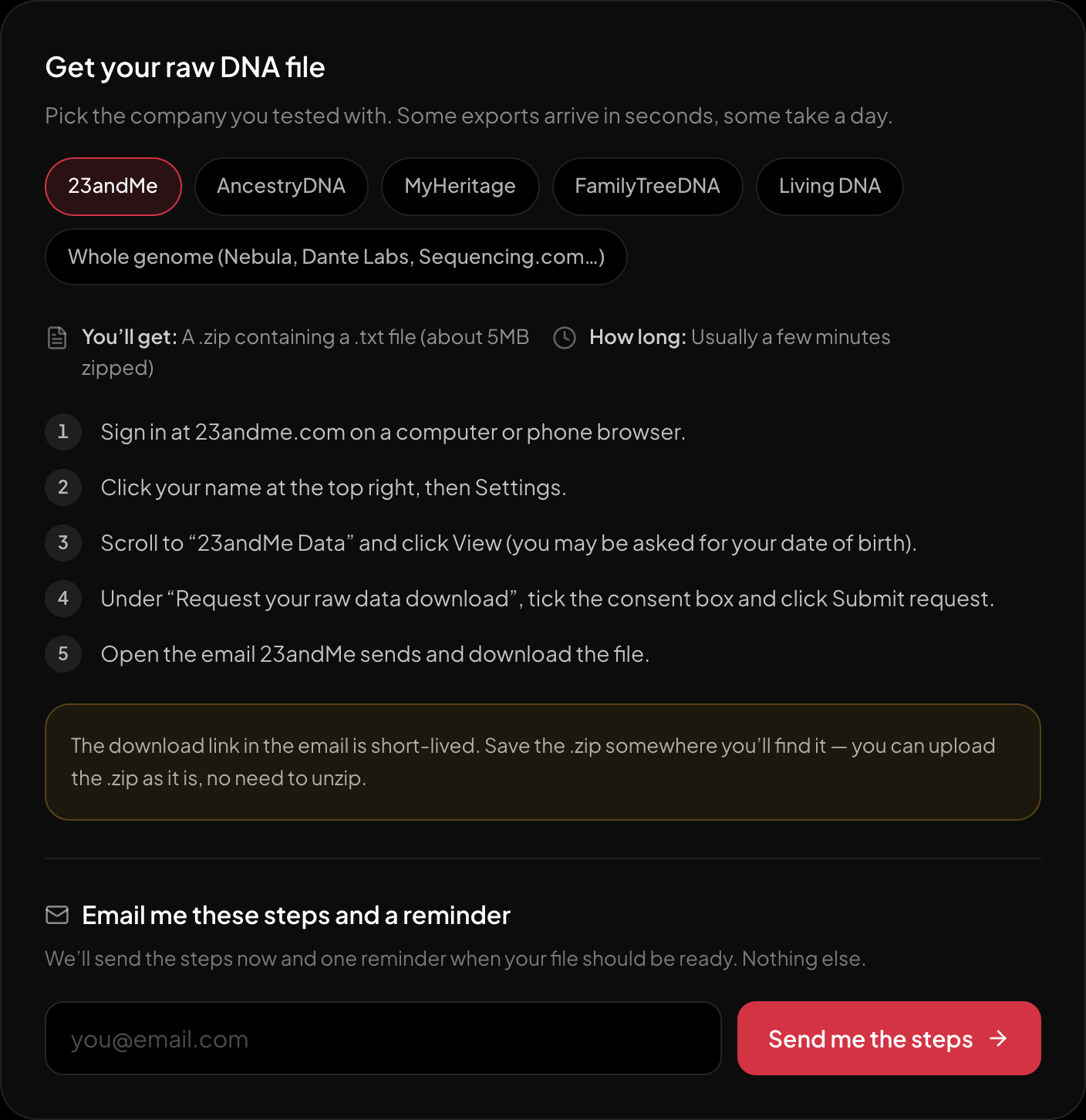
The download steps for 23andMe, on the page itself.
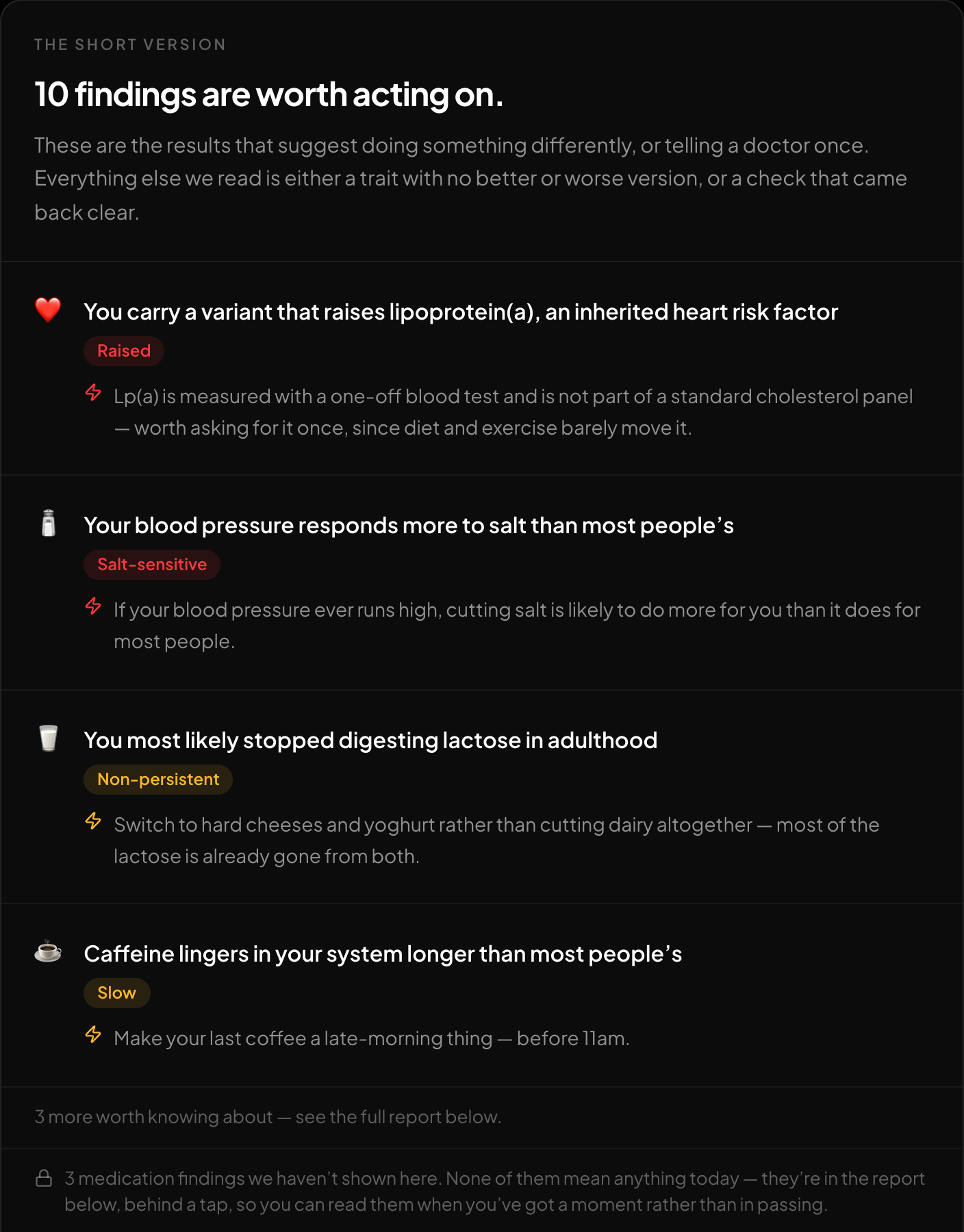
The short version: what is worth acting on, first.
To see whether your report includes the PNPLA3 finding, check for 'PNPLA3: How readily your liver stores fat' in the trait report. If a gene is not on the report list, it is not included. You can use the free DNA tool. The tool is free and does not require an account. Supported raw data sources are listed there. The trait report runs in your browser. The trait report needs rsIDs, which 23andMe files include. A VCF without rsIDs gets ancestry only and will not get the trait report. APOE and haplogroups are not in the free report. Ask your DNA requires storage with consent and gives 5 free questions. There is no relative matching, sequencing, or polygenic risk scores.
New to raw DNA files? Start with the full guide: How to Download & Analyze Your 23andMe Raw Data Free
Written by
HealthOS Research