What HLA-B*5801 Means in Your Raw DNA
HLA-B*58:01 is a gout-drug safety marker. 23andMe raw data normally lacks an HLA-B*58:01 call, so a positive result is a third-party inference and is not clinical without confirmatory HLA typing.
Your 23andMe raw file usually does not contain a direct HLA-B58:01 result; if you see it, it has probably been inferred from nearby SNPs and is not clinical by itself. HLA-B58:01 (often written HLA-B*5801) is a star-allele name for a version of the HLA-B immune gene. The finding matters because this allele is associated with an immune-mediated severe cutaneous adverse reaction to allopurinol/oxypurinol, a common first-choice gout drug. It is a risk flag, not a diagnosis.
HLA-B*58:01 is not an allergy. It is a genetic flag that says allopurinol may trigger a severe immune-mediated skin reaction, so it is worth checking before gout treatment starts.
HealthOS is not clinical HLA typing. A raw-data or inferred result should be confirmed by a clinical HLA-B*58:01 test before any prescribing decision.
What does HLA-B*58:01 mean in my 23andMe raw data?
Raw DNA files from 23andMe do not sequence the HLA-B gene itself. They genotype small single-letter markers across the HLA region. A third-party report may use a tag SNP near HLA-B, not the star allele itself, and infer that HLA-B58:01 is likely present. If your file has a row for a tag SNP, a report may call the risk allele present or absent. If you only see HLA-B58:01 in a third-party tool, that tool is doing the inference for you. The raw genotype line is not the same as the star allele. The strength of the inference depends on the tag SNP, the population, and how well that tag SNP tracks the allele. Ancestry and tag-SNP performance affect reliability. A direct clinical HLA typing test is the definitive check. If the tag marker is missing or uncalled, the file is not telling you that you are negative. It is telling you nothing.
Why this matters for gout treatment
Allopurinol lowers uric acid by blocking xanthine oxidase. Most people tolerate it. HLA-B*58:01 is associated with an immune-mediated severe cutaneous adverse reaction to allopurinol/oxypurinol. The clinical concern is allopurinol-induced Stevens-Johnson syndrome, toxic epidermal necrolysis and DRESS. These are not ordinary rashes. The top layer of skin can separate, the mouth and eyes can blister, and the reaction can be fatal. Onset usually happens 1 to 8 weeks after starting the drug, not on the first tablet. The relative risk is substantially higher in carriers. Even among carriers, most people who take allopurinol do not develop SJS, TEN, or DRESS.
How common is HLA-B*58:01?
Carrier frequency depends heavily on ancestry. The allele is common in East Asian and some African populations, and uncommon in European populations.
The bars above are illustrative approximations, not exact cited population rates. The practical point is not the exact percentage. It is whether your own raw data report flags the finding before a prescription decision. Ancestry and tag-SNP performance affect reliability. Do not confuse HLA-B58:01 with HLA-B15:02, a separate allele linked to carbamazepine skin reactions, or with HLA-B*57:01, which matters for the HIV medicine abacavir.
What a positive HLA-B*58:01 does and does not mean
What it does mean:
- Before allopurinol is prescribed, your risk of a severe skin reaction is higher than the population baseline.
- A prescriber may choose a different urate-lowering drug.
- The finding is inherited and stays the same for life.
What it does not mean:
- It does not mean you will definitely react. Most carriers who take allopurinol do not develop SJS or TEN.
- It does not mean you are allergic to allopurinol right now. It means exposure carries higher risk.
- It does not close off every gout medicine. The warning is specific to allopurinol.
- A negative raw data result does not make allopurinol skin reactions impossible.
Do not start, stop, or avoid allopurinol based solely on a raw SNP or inferred star allele. Discuss confirmatory HLA typing and alternative gout treatments with the prescriber.
What if you are already taking allopurinol?
The highest risk window is the first 1 to 8 weeks. If you have taken allopurinol for many months with no skin reaction, the immediate danger is lower, but any new rash, mouth sores or blistering should still be assessed urgently. Do not stop a prescribed medicine based on a raw DNA file alone. Bring the report to the clinician managing your gout.
Where to see this in your own numbers
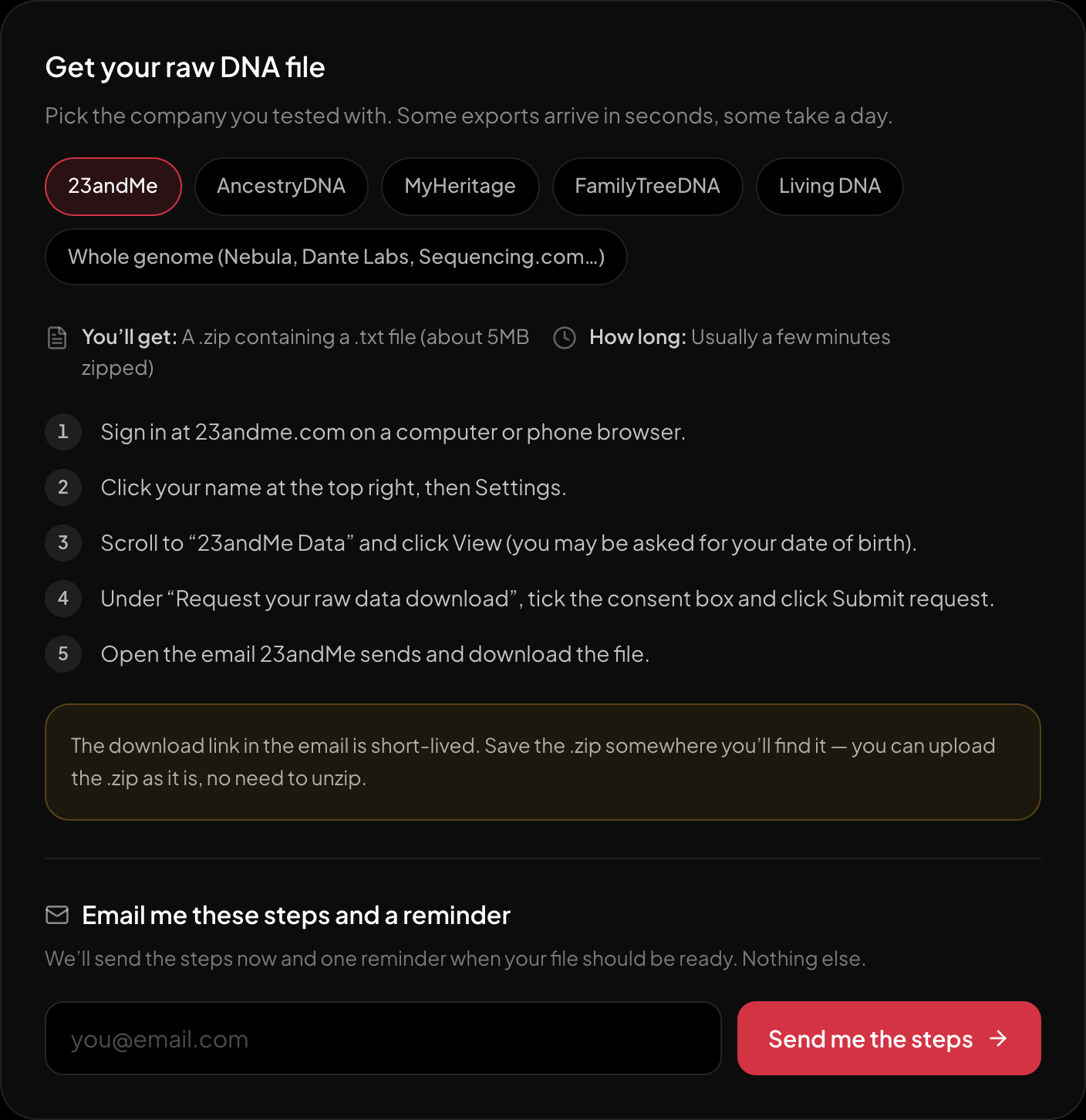
The download steps for 23andMe, on the page itself.
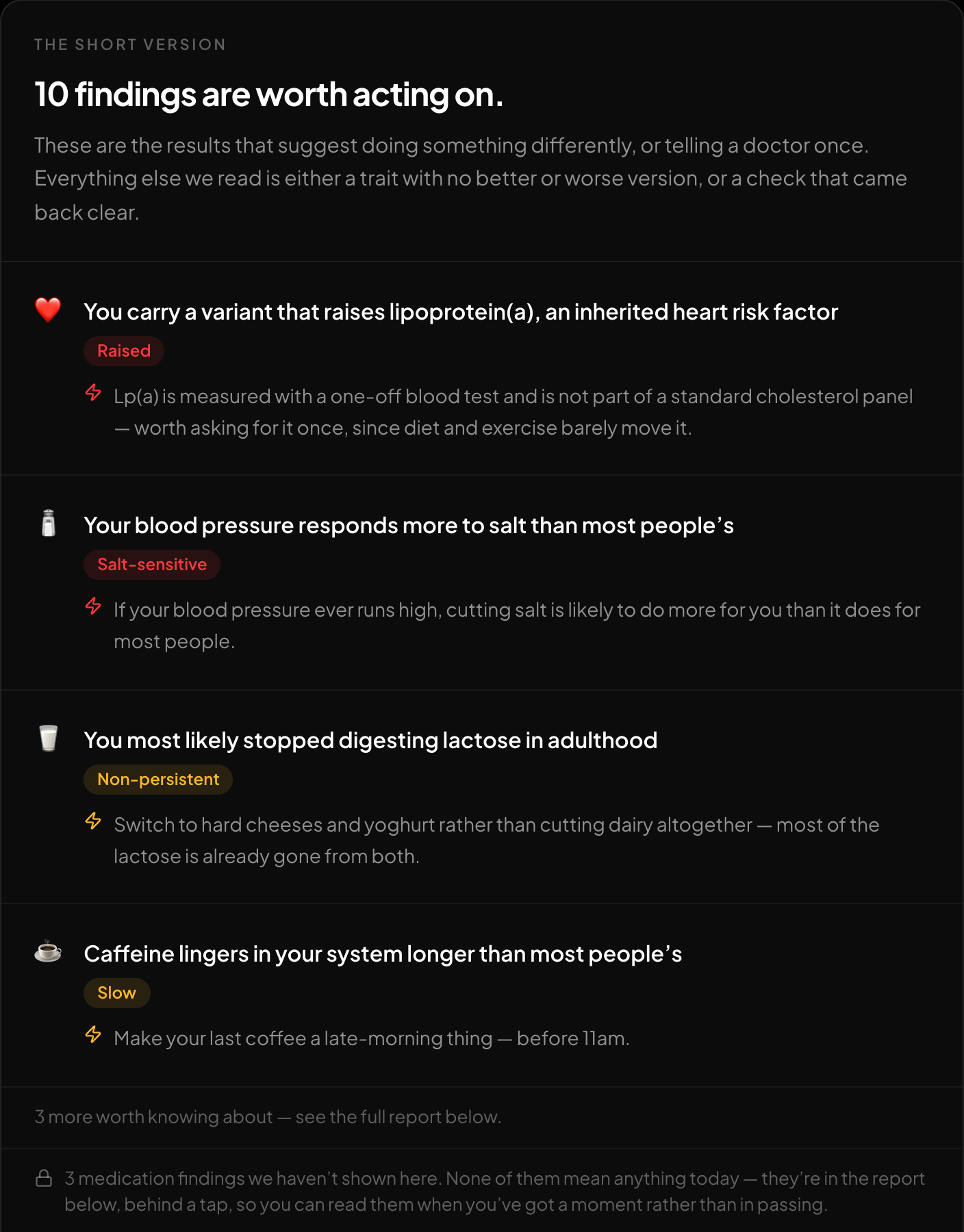
The short version: what is worth acting on, first.
If you have a 23andMe, AncestryDNA, MyHeritage or whole-genome VCF file, the free DNA tool at HealthOS parses it in your browser. HealthOS is not clinical HLA typing. Medication-response guidance is available where the uploaded file contains the required named variants; unnamed or raw VCFs without rsIDs may not produce the health or pharmacogenomic findings. If allopurinol guidance appears, confirm any HLA-B58:01 result with a clinical HLA-B58:01 test before any prescribing decision. To open the full report, enter a one-time email code. No account, payment, or kit is needed.
New to raw DNA files? Start with the full guide: How to Download & Analyze Your 23andMe Raw Data Free
Written by
HealthOS Research